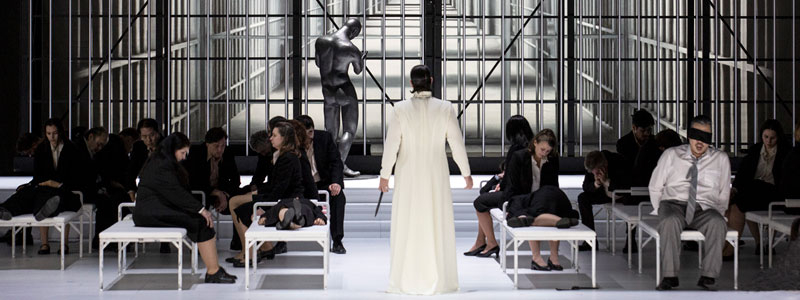
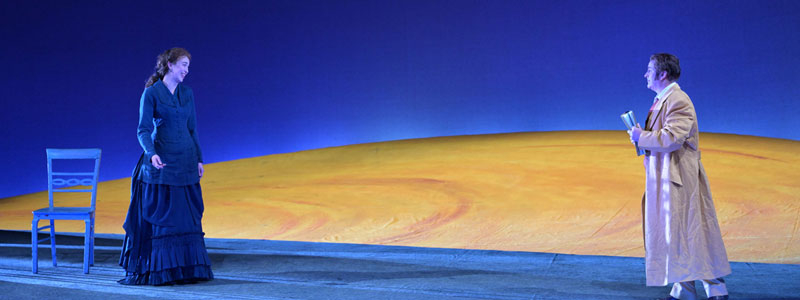
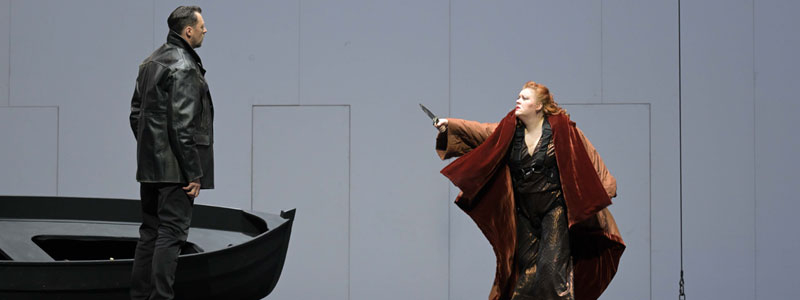
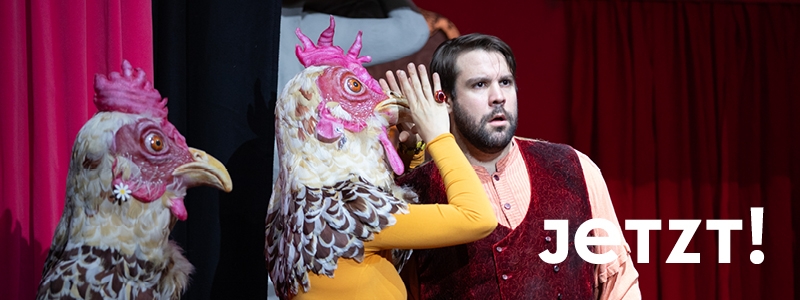
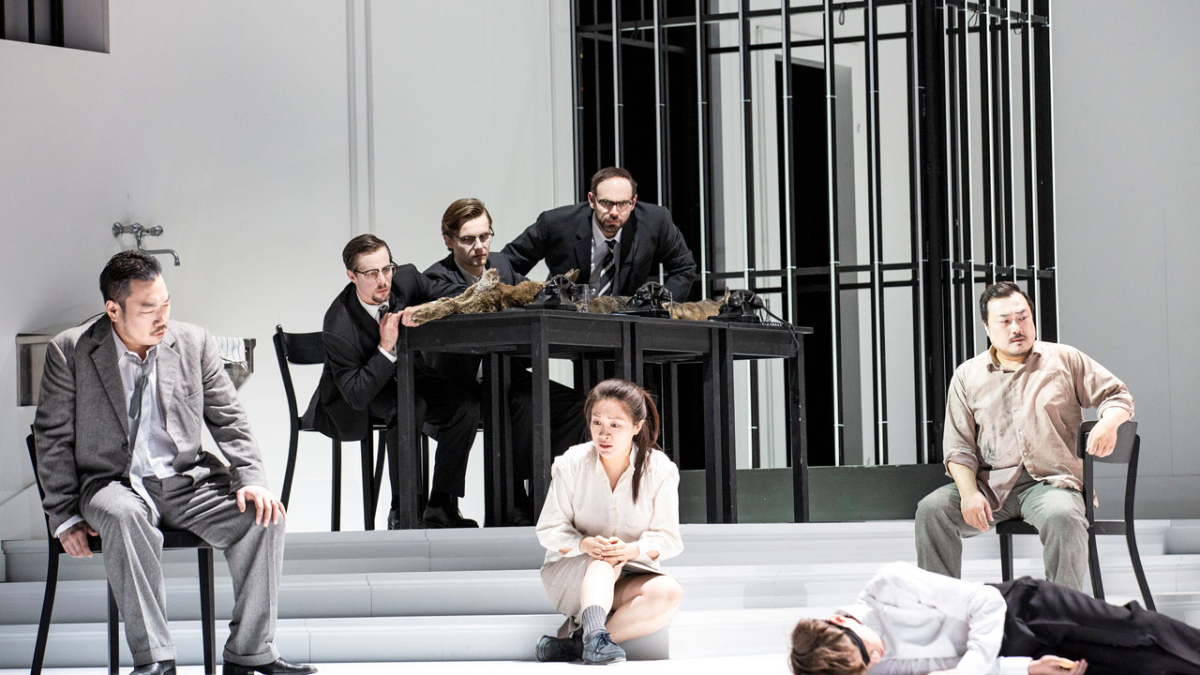
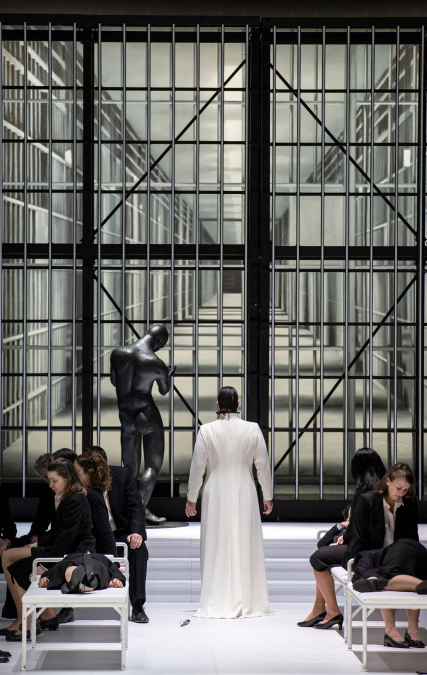
Turandot's so determined not to marry, much to her father’s chagrin, that she sets a nigh impossible condition: Anyone wanting to marry her must solve three riddles. Anyone failing the test, is publicly executed. The Prince of Persia, like dozens before him, failed, so the people of Peking have come to attend his execution. An unexpected reunion takes place in a crush of subjugated people: Prince Calaf, forced to flee to Peking by war, finds his father Timur and his slave Liù, who helped Timor escape and has always been in love with Calaf. They witness a gruesome ritual which culminates with Turandot reaffirming the death sentence for the young Prince of Persia. Calaf, who just condemed the Princess’ brutality, is transformed by the sight of her: Now he’ll do anything to win the place at her side. Three Ministers, Ping, Pang and Pong, try their best to stop Calaf taking on the three deadly riddles, but are constantly torpedoed by Turandot’s servants and voices of deceased suitors, so fail to change his mind. Liù makes one last attempt, telling the Prince that she and Timor will die without him. Calaf ignores her too: He announces his intention to face the trial of riddles with three strikes on the gong.
ACT 2 With Calaf, a new suitor in the wings, the Ministers must take precautions: If he solves the riddles, to organise the wedding. If he fails, his funeral. They reflect on how many suitors they’ve seen going to their deaths, coming to the realisation that they’re nothing more than »Executioner’s Ministers«. Instead of wasting time in Turandot’s killing factory, they dream of going back to their homes in the country and leading simple lives. They desperately hope Turandot will marry and China find peace again. The people of Peking have meanwhile reassembled to attend the public trial of riddles. Emperor Altoum, visibly sickened by his daughter’s bloodthirstiness, tries to persuade Calaf to flee, which he refuses to do. Turandot explains why she could never tolerate a man by her side: Her ancestor Lo-u-Ling was violated and killed by an unknown Prince many thousands of years ago. The Princess now takes revenge for this crime on her suitors. Turandot’s shaken to the core when Calaf solves all three riddles, begging her father not to marry her to an unknown man. Calaf, still enjoying anonymity in Peking, poses the Princess a counter-riddle: If she can guess his name by dawn, he’s willing to die.
ACT 3 Turandot, desperate to do anything in her power to find out his name, issues a further ominous edict: Nobody in Peking’s allowed to sleep, so they can try and find out the Prince’s identity, on pain of death. Calaf dreams of getting the better of Turandot next morning. The Ministers appear, making the Prince an offer: If he reveals his name they’ll give him untold riches and help him escape. But Calaf stands firm. Henchmen bring in Liù and Timur, the only people in Peking who know Calaf’s name, so the Ministers can torture them under Turandot’s watchful eye. Liù summons all her strength to keep her secret. When Turandot asks what makes her so strong, the slave answers: »Love«. Turandot intensifies Liù’s torture, until she makes one last, heartfelt speech: Prophesying that Turandot will feel the power of love one day too, before stabbing herself for all to see. Can Turandot’s reign of terror continue after this suicide?