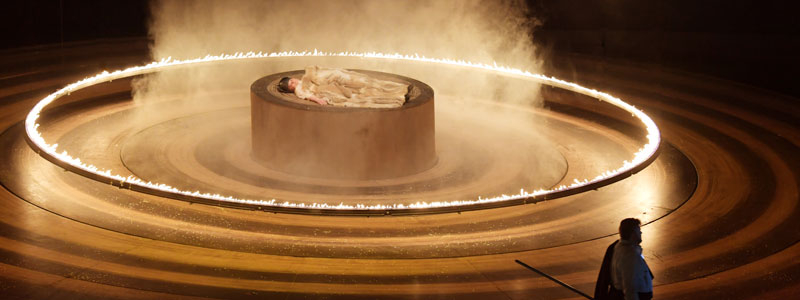
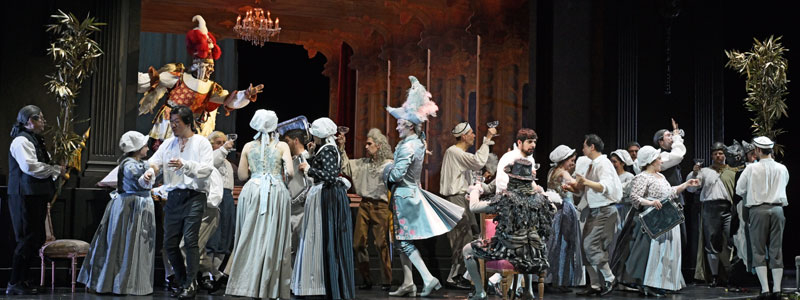
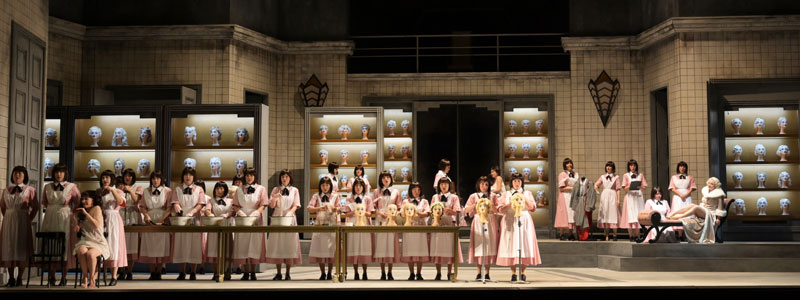
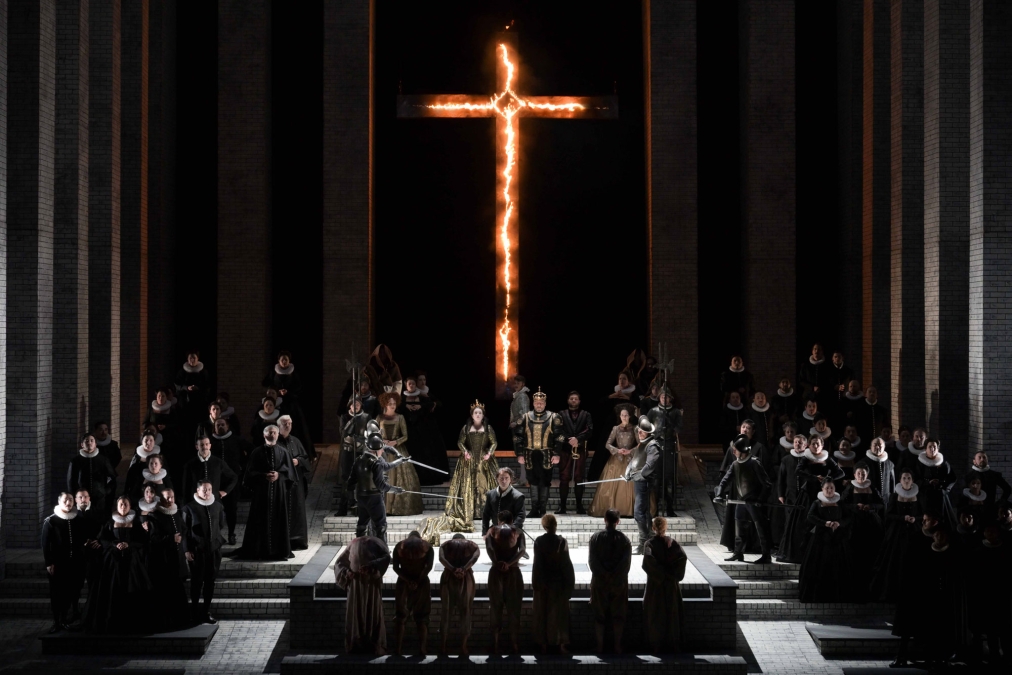
BackgroundTo strengthen peace negotiations between France and Spain, Carlos, heir to the Spanish throne, is to marry Elisabeth, princess of France. Act 1 Carlos, dying to know what his future wife looks like, has followed the envoys to France. Carlos and Elisabeth meet in a forest near Fontainebleau and fall in love. They're devastated when they find out that the King of Spain now intends to marry her himself. Her people beg her say yes, and she reluctantly agrees. Act 2 part 1 On their way back to Madrid the court visits the cloister of San Yuste to pay their respects at the grave of Charles V. Monks sing about the finite nature of earthly existence. Posa, Carlos’ childhood friend, tries to distract Carlos from his misery by urging him to take up the cause of troubled Flanders. Both reaffirm their friendship in the name of liberty. Act 2 part 2 Princess Eboli and other ladies are waiting for the Queen: Eboli sings the Song of the Veil. At a private meeting arranged by Posa, Elisabeth promises Carlos to ask the King to endorse his Flemish venture. Carlos again swears undying love for Elisabeth. Philip, finding his wife alone, banishes her closest friend, who assumes responsibility for this unguarded moment, to France. Posa speaks frankly with the King, who, impressed by his honesty about Flanders and the concept of liberty, trusts him. He tells Posa that he suspects the Queen of infidelity and asks him to watch her. Act 3 part 1 Carlos has received an anonymous note. He goes to meet a veiled lady who he assumes to be Elisabeth. But it's Princess Eboli, who's in love with him. By the time Carlos realises his mistake it's too late. Eboli realises that he still loves the woman who is now his stepmother and swears revenge. Posa arrives, asking Carlos to give him any incriminating papers he may have that mark him out as a supporter of Flanders. Act 3 part 2 During a ceremony at which heretics are to be burned, Carlos asks his father to make him Governor of Flanders; when he refuses, Carlos draws his sword. Posa disarms him: Carlos is arrested. INTERVAL Act 4 part 1 Philip realises that Elisabeth has never really loved him and feels very lonely. The Grand Inquisitor appears, demanding that the King show no mercy to his son and insisting that Posa be put to death. Philip refuses to sacrifice the only incorruptible man among his advisers. Elisabeth has lost a jewel box. Philip produces it and the portrait of Carlos it contains. He accuses his wife of being unfaithful. She professes her innocence. Posa reproaches Philip for his lack of self control. Eboli tells Elisabeth that it was she who stole the jewel box and admits to have been having a relationship with King. The Queen banishes her from court. Eboli repents and vows to enter a convent, but she intends to save Carlos first. Act 4 part 2 Posa visits Carlos in prison and tells him he has incriminated himself as being the leader of the Flemish rebels so that Carlos will be set free. Posa is shot. Before he dies he tells Carlos that Elisabeth will be waiting for him at the monastery the following day. Philip arrives to set Carlos free. Carlos tells his father that Posa incriminated himself in order to save him. He cannot forgive him ordering the execution of his best friend and tells the King that he no longer has a son. A rebellion, planned by Eboli to help Carlos, is thwarted by the Grand Inquisitor. Act 5 On his way to Flanders, Carlos meets Elisabeth in San Yuste for the last time. They pray that they will be reunited in the afterlife. They are discovered by the King and the Grand Inquisitor. Before Carlos can be taken before the Inquisition a mysterious force, something from the time of Charles V, intervenes and saves Carlos from earthly jurisdiction.