Prologue
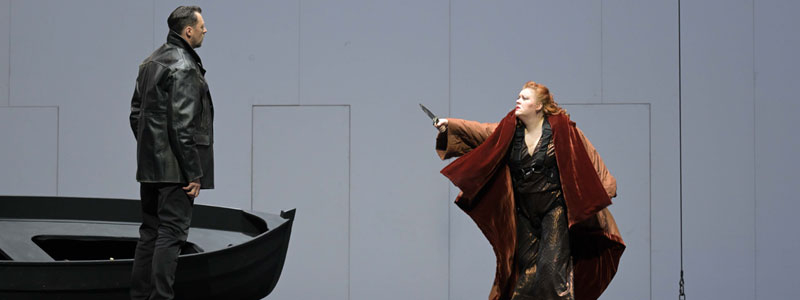
Strife’s rife amongst the Gods: Ought Aeneas, the Trojan hero, come ashore in Latium after his odyssey or not? Venus, Aeneas’ mother, implores Jupiter, King of the Gods, to take mercy on her son and allow him to land. Jupiter agrees. But affairs of state must be altered first: Princess Lavinia, the ideal partner for Aeneas, was promised in marriage to Turnus, King of the Rutuli. Amor’s help is enlisted …
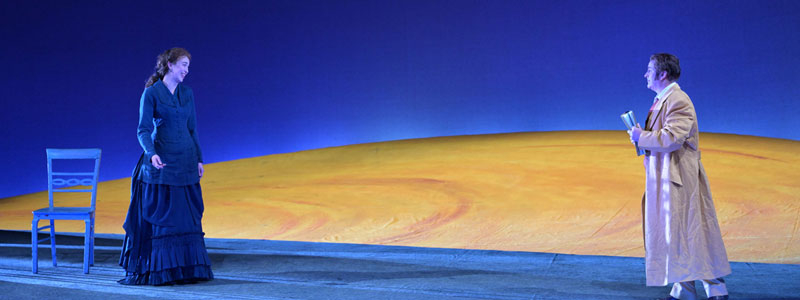
Act 1 Lavinia can’t get a man she saw in a dream out of her head. On the day of her wedding she confides in Nicea, her nurse: she’s certain that she’s destined to marry him, not Turnus. When he, introducing himself as Aeneas, suddenly appears before her they feel strongly drawn to one another. But Lavinia takes Aeneas’ words to mean that he loves someone else. She withdraws. Aeneas’ companion Corebus is dispatched to find out about Lavinia’s innermost feelings.
Lavinia’s sister Giuturna’s turning herself into knots about her feelings for Turnus. Lavinia tells him she’s only marrying him out of a sense of duty, so would never make him happy; it would therefore be best if he kept his distance. Turnus, deeply offended, swears revenge, while Corebus starts flirting with Nicea to find out more about Lavinia.
Act 2 King Latinus, determined that the marriage between Lavinia and Turnus will go ahead, appeals to his daughter’s conscience. But Lavinia digs her heels in: she could never control her emotions, fate has destined her for another. Giuturna tries to persuade Turnus to forget her sister. Latinus formally welcomes Aeneas to Latium. When Turnus accuses Latinus and Lavinia of lying under oath, threatening to avenge the cancelled wedding, Aeneas sides with the Latins.
INTERVAL
Lavinia wonders if committing suicide might be a way to solve the conflict and save her father and the kingdom. Aeneas finds out from Corebus that Lavinia has loved him ever since he – as she to him – appeared in a dream. He swears to avenge Lavinia in a duel with Turnus, before taking his own life. Giuturna tells Nicea that she’s Lavinia, whereupon Jupiter, in the guise of Turnus’ captain Coraltus, appears, abducting Giuturna, alias Lavinia.
Act 3 Latinus is desperate. Faunus appeared to him in a dream imploring him not to allow the wedding between his daughter and Turnus to take place, because Lavinia’s destined for Aeneas. The Trojan hero will found a new Empire in Latium and, with Lavinia, a noble race emerge, whose fame will be hailed far into the future. Giuturna’s brought before Turnus. She, still maintaining that she’s Lavinia, speaks of her love. A duel takes place between Aeneas and Turnus. Giuturna prevents Aeneas killing his rival, demanding her rights as »the injured party« to punish Turnus for her supposed abduction. She raises her sword, but can’t deliver the fatal blow; whereupon they profess their love for one another. Lavinia curses Amor and the stars for choosing her for Aeneas, who doesn’t seem to reciprocate the love for him in her eyes. Nicea encourages Lavinia to trust the powers of fate. All misunderstandings are finally cleared up when Aeneas and Lavinia next meet. And Aeneas says what Lavinia so badly wanted to hear: It was her, who appeared in his dream. Everyone praises the joys of love and restoration of peace. Amid the general euphoria, Venus turns to her son Aeneas and reminds him to follow his pre-destined path.