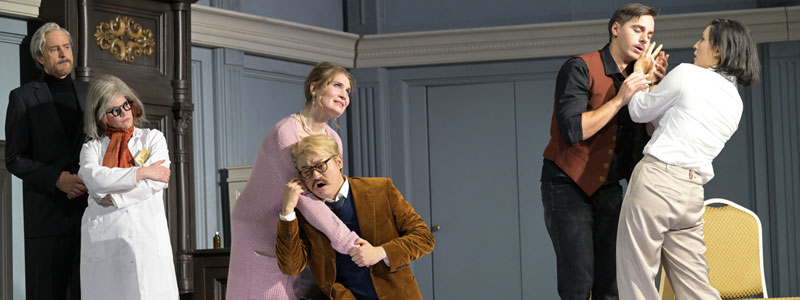
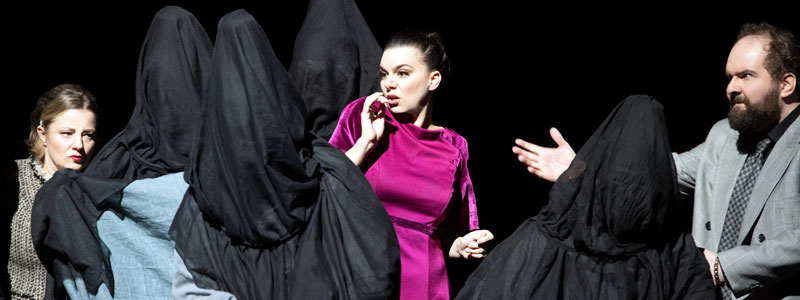
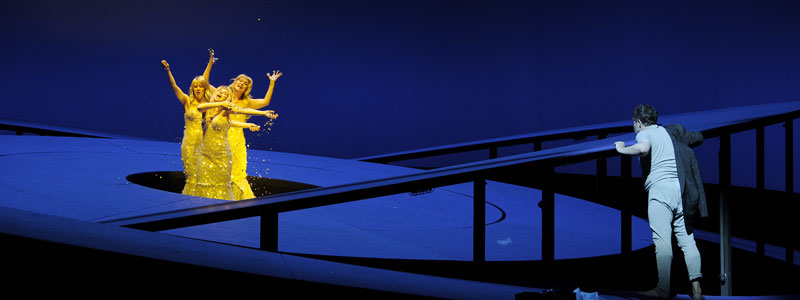
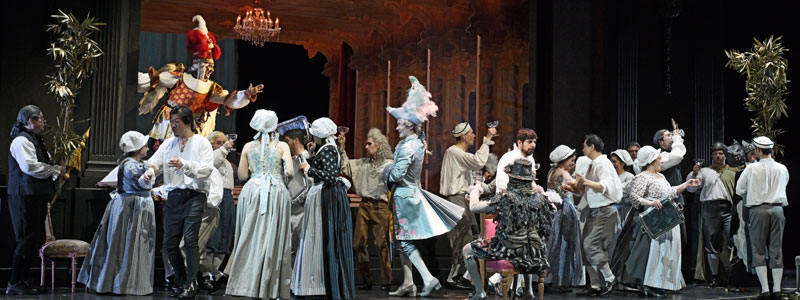
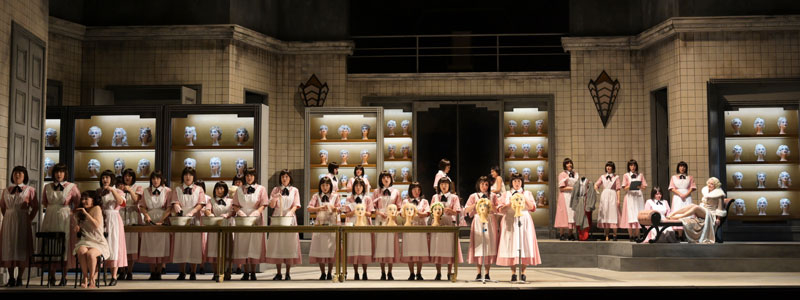
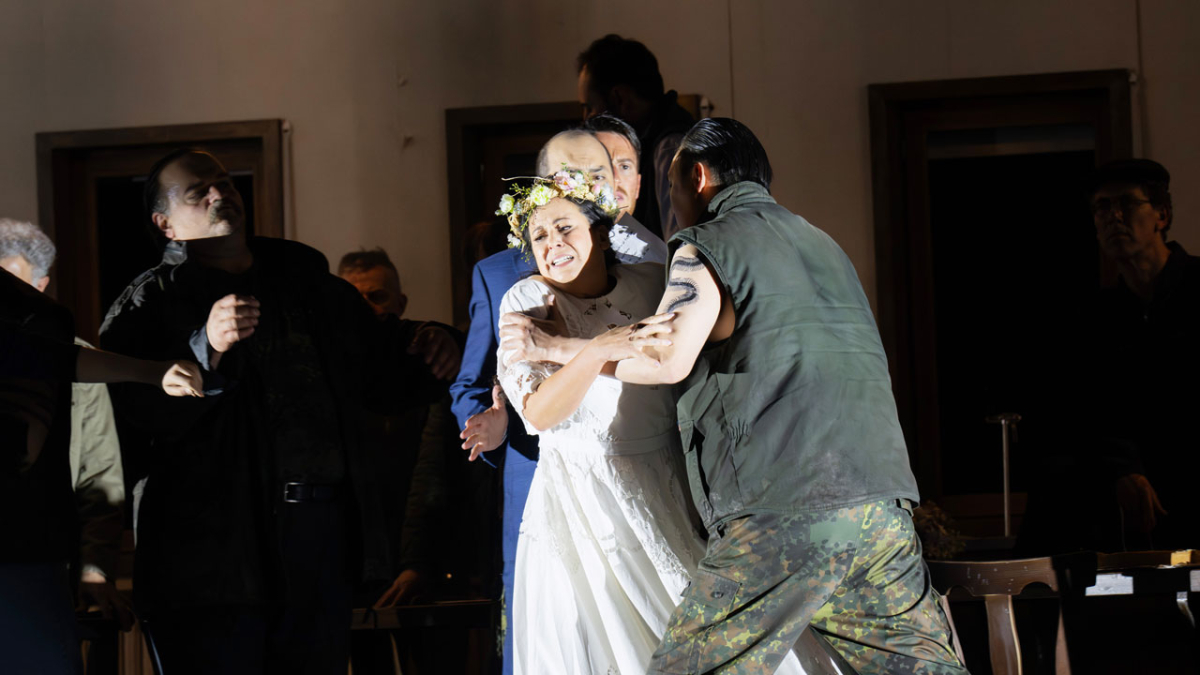
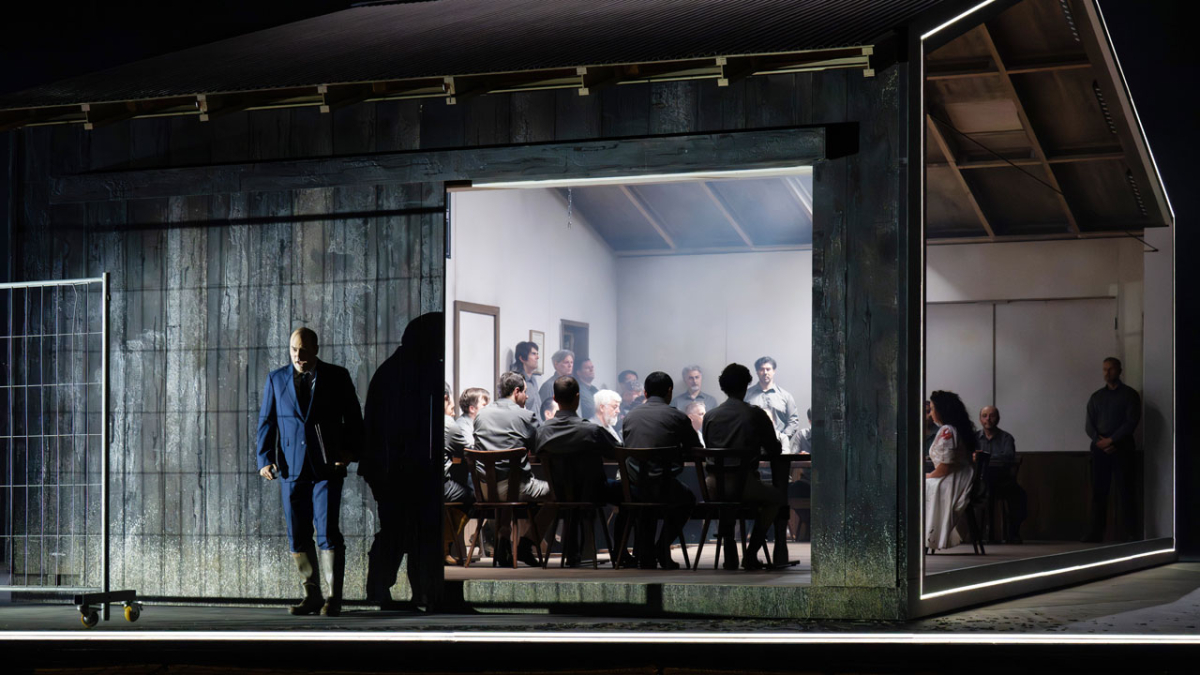
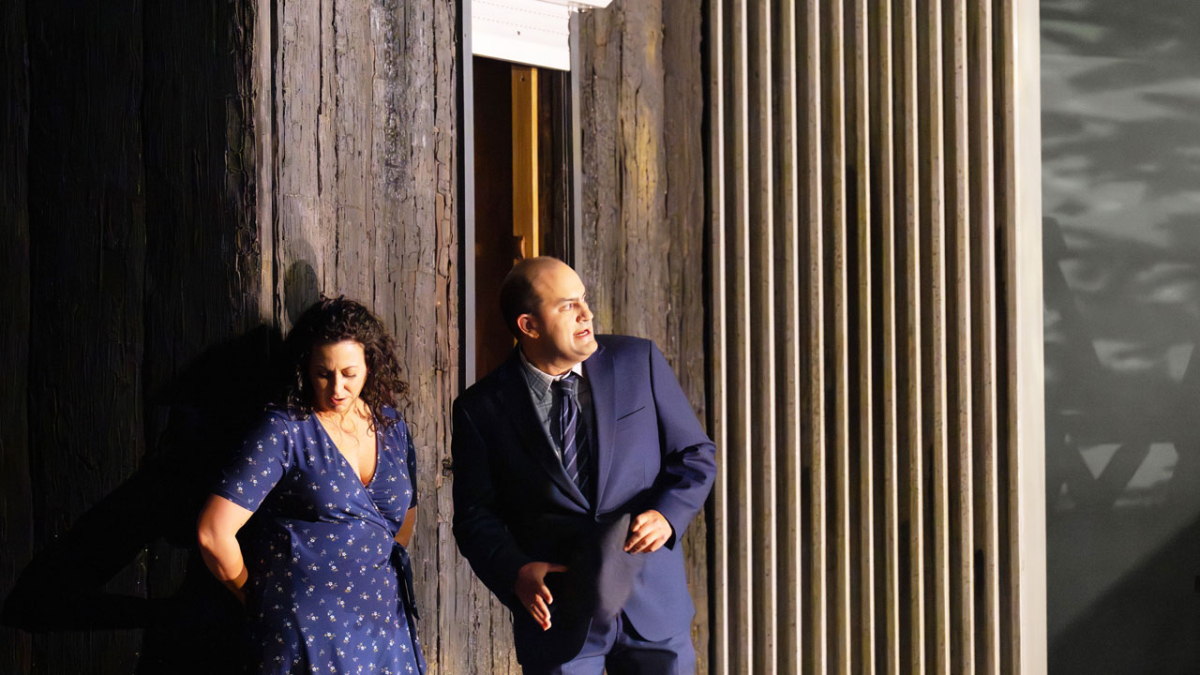
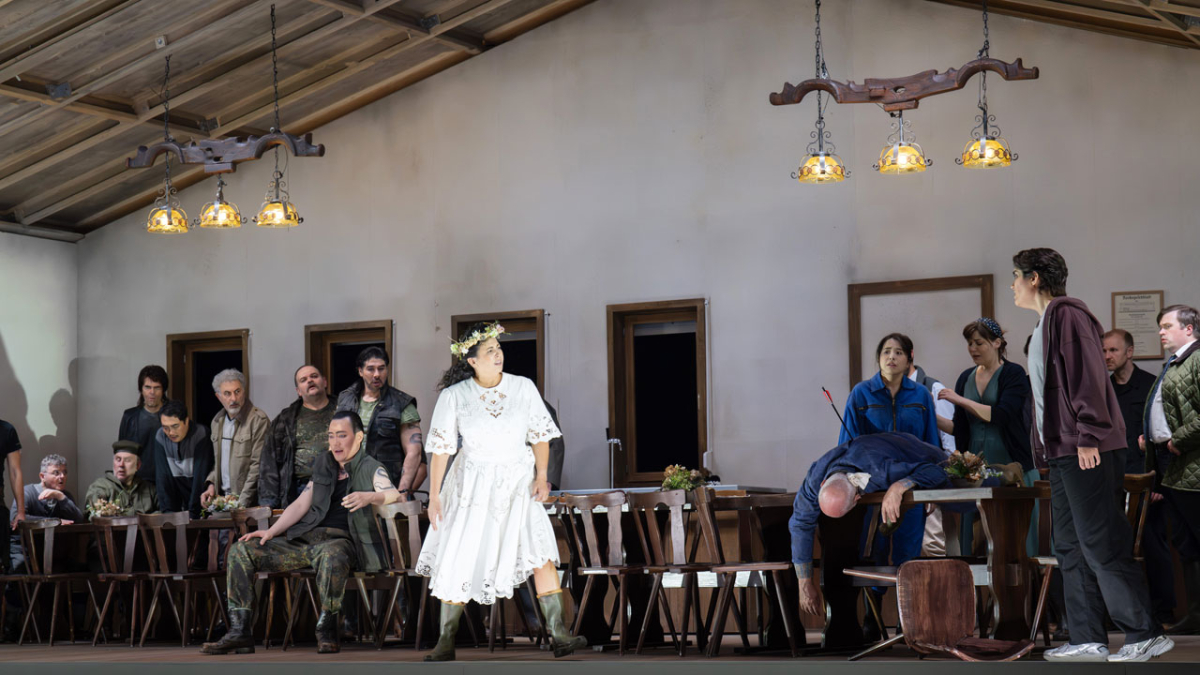
Argirio und Orbazzano, rivals and enemies, see their homeland under threat from the Saracens. They make a pact to defend it, swearing unconditional loyalty to their country. Orbazzano’s to take command in the battle, in moderate Argirio’s place. Argirio promises him his daughter Amenaide’s hand as a token of their new solidarity. A draconian rule is passed to guard against internal treachery: Every man, or woman, in league with the enemy, will be executed. Amenaide’s heard that her beloved Tancredi, banished many years ago, is on his way home. She writes him a letter, prudently not addressed to anyone, so nobody could know it’s for Tancredi, entrusting it to a friendly messenger, to deliver in secret. Argirio tells her she must marry Orbazzano. Amenaide, horrified, begs for it to be postponed, but her father insists she do her duty for the fatherland. Tancredi comes home, incognito, at night, looking forward to seeing Amenaide again, full of optimism. But when they meet she’s distraught and cold shoulders him. Fearing for his life, she begs him to flee. Wedding preparations are underway. Certain that no one will recognise him, as he was a child when he went into exile, Tancredi offers his services to Argirio as a fighter. Amenaides refuses to marry Orbazzano, just before the wedding’s about to take place. Orbazzano then produces the letter she sent Tancredi: The messenger was intercepted and killed. It’s misconstrued and taken as proof that she loves the Saracen prince, and committing high treason. As a traitor, the death sentence looms.
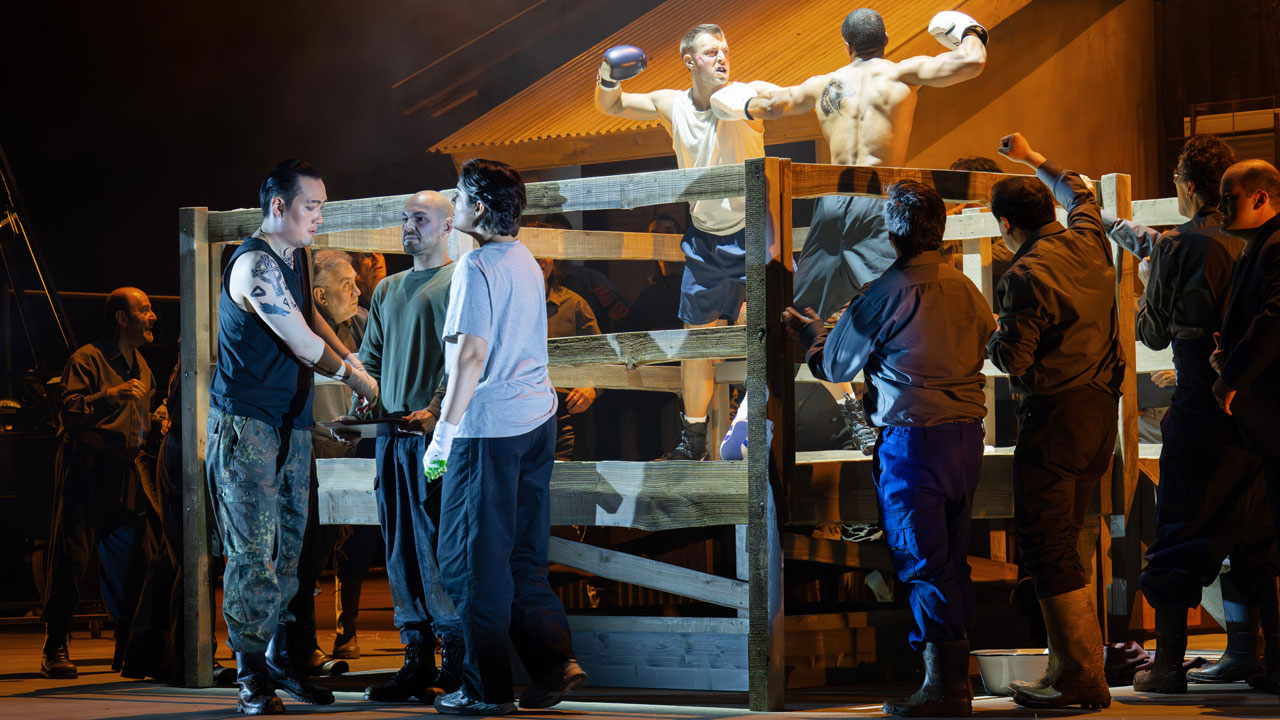
ACT 2 Amenaide’s to be executed. All that’s missing is Argirio’s signature on the death warrant. He dithers, torn between love for his daughter and duty to the fatherland. Orbazzano urges him to apply the law without pity. He signs it. Amenaide’s friend Isaura accuses Orbazzano of taking revenge for being rejected, but he warns her she could come under suspicion of being an accomplice. Amenaide’s in prison waiting to be executed. What hurts most is that Tancredi thinks her unfaithful too. At the last minute Tancredi tells the anguished father he’ll fight for his daughter’s cause, without saying who he is. Orbazzano accepts the stranger’s challenge, certain of an easy victory. Amenaide awaits the outcome of the duel in trepidation. Tancredi won, Orbazzano died. Tancredi’s named as the new commander in the fight against the Saracens. Tancredi saved Amenaide’s life, but still thinks her unfaithful. He wants to die. Nothing’s resolved when they meet for the last time because Amenaide still thinks she must keep his identity secret to protect her letter’s addressee. Tancredi’s mortally wounded in the battle against the Saracens, only finding out on his deathbed that Amenaide never stopped loving him.