The Love for Three Oranges
Sergei S. Prokofjew 1891–1953
Opera in 4 acts and a prologue.
Libretto by the composer after Wsewolod E. Meyerhold and Carlo Gozzi
German translation by Werner Hintze
World premiere December 30 1921, Auditorium Theatre, Chicago
Sung in German with German & English surtitles
an introductory talk starts in the Holzfoyer 30 mins before performances begin, appears here and everywhere podcasts are to be found shortly after opening night
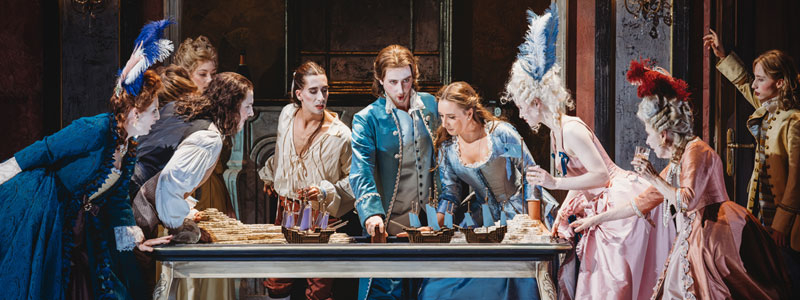
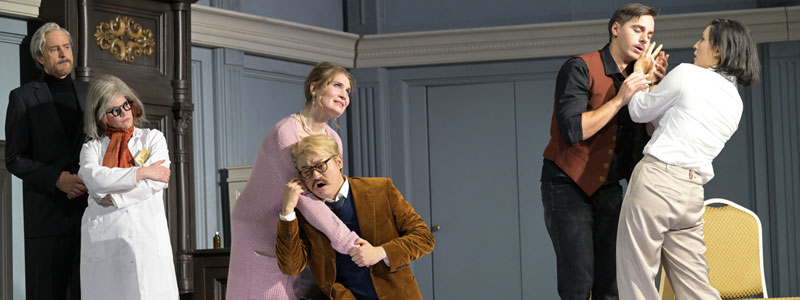
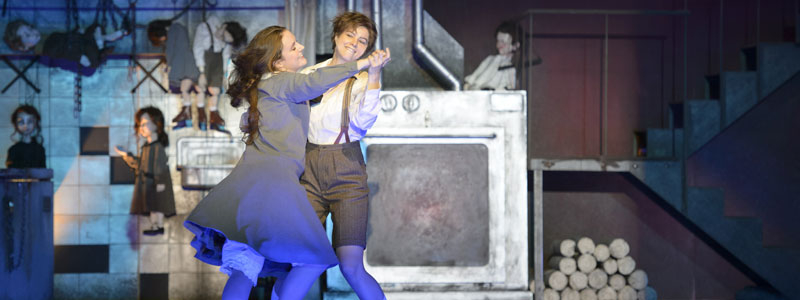
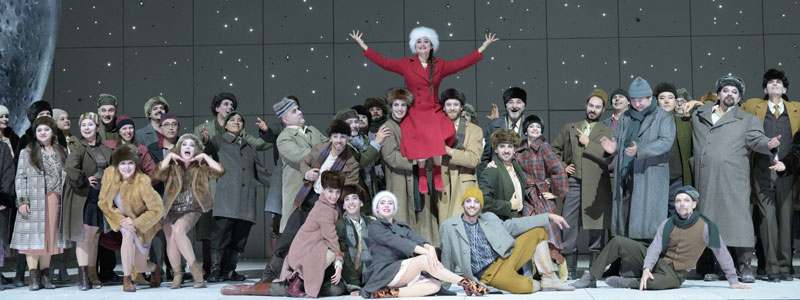
Good and evil magicians, corrupt officials and power-hungry relations join a hypochondriac prince on his path to recovery. Sergei Prokofiev was 28 when he left Russia, via Japan, to live in the USA after the October revolution, where he wrote this sarcastic fairy tale opera based on a one of Carlo Gozzi’s Commedia-dell’arte. The pioneering Russian director Wsewolod E. Meyerhold, a friend of Prokofiev’s, completely re-worked it, turning its structure upside down and breaking all boundaries between fairy tale and comedy, which divided audiences: Some wanted tragedies, others slapstick. Joined by oddballs, who criticized the quirky plot.
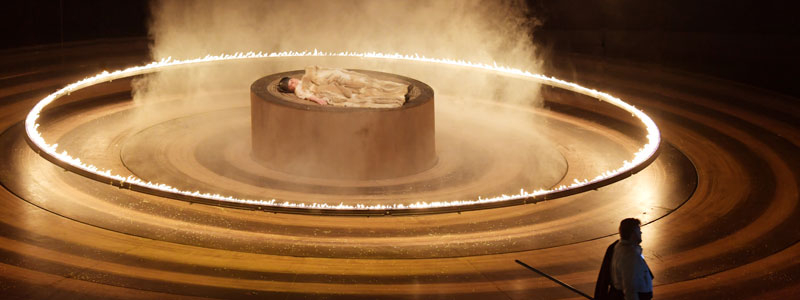
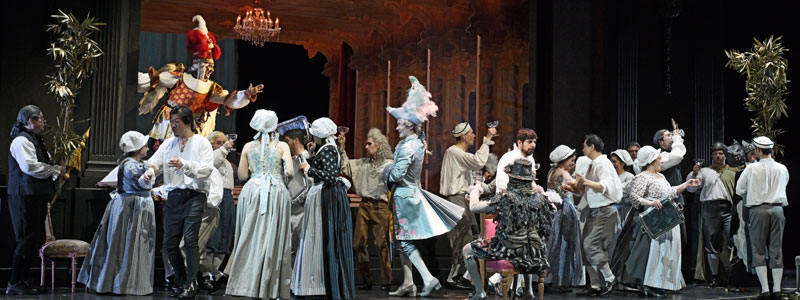
King Treff wants to abdicate, but doesn’t want his unpopular niece Clarice to succeed him. She’s backed by Prime Minister Leander and the nasty fairy Fata Morgana. The King wants his son to ascend the throne, who’s backed by the clown Truffaldino and good magician Tschelio. The hypochondriac prince is only cured when he laughs. Conventional jokes are no good, only Schadenfreude: when Fata Morgana trips up, cheers him up, but the nasty witch takes her revenge, cursing him to love three oranges in the desert. The Prince finds, Ninetta, his great love, at last when the third orange is opened. There’s a happy end, despite further intrigues, dampened by Fata Morgana, who manages to rescue all the baddies from the gallows.
Young Prokofiev’s music is perfect for this peculiar story: he created a multi-layered score to increase dramatic tension, instead of splitting it up into numbers, full of fascinating melodies, garish ensembles and ridiculous chorus scenes. The instrumentation provides tongue-in-cheek commentary on the libretto, surprises too by contradicting it. Prokofiev explodes the forms of fairy tale telling and stand-up-comedy. A firework of wonderful ideas, wit, biting irony, societal criticism and love – not just for citrus fruits …