Mazeppa
Peter I. Tschaikowski 1840–1893
Opera in 3 acts and 6 scenes
Libretto by Victor P. Burenin and Peter I. Tchaikovsky after Alexander Pushkin
World Premiere February 15 1884 Bolschoi, Moscow
Production acquired from the Tirol Festival in Erl, first seen July 12 2024
Sung in Russian with German & English surtitles
There are highly emotional, sometimes brutal scenes, so not suitable for people younger than 14!
Introductory talks 30 mins before curtain up in the Holzfoyer, here, and everywhere podcasts can be found shortly after opening night
There's a chance to talk about what you've just seen after the performance on October 10: Discussing an Opera
Conductor Karsten Januschke
Mazeppa Petr Sokolov
Maria Nombulelo Yende
Kochubey Alexander Roslavets / Alex Birkus (Sept 18, 20, 26 & Oct 4)
Andrej John Findon / Kudaibergen Abildin (Oct 1)
Ljubov Karolina Makuła
Orlik Jarrett Porter
Iskra Jihun Hong°
Drunk Kossack Kudaibergen Abildin / Sven Hjörleifsson (Oct 1)
°Member of the Opera Studio
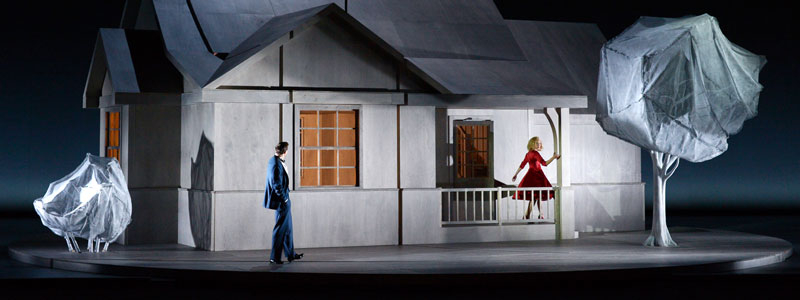
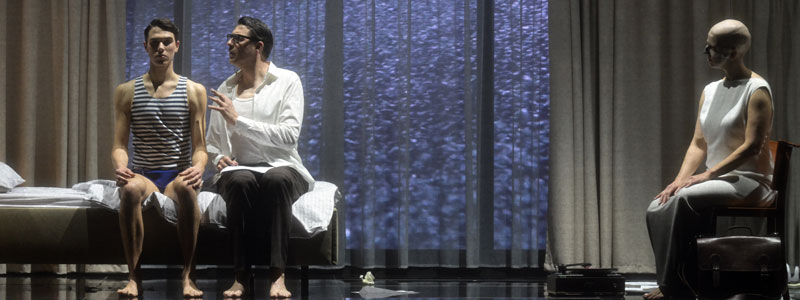
Gangster boss Ivan Mazeppa was wounded in a shootout with the police. He takes refuge in his friend and business partner Vasily Kochubey’s home, where his wounds are tended and he meets Kochubey’s daughter Maria for the first time.
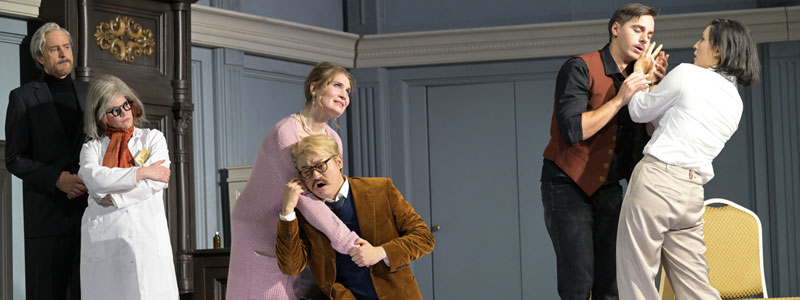
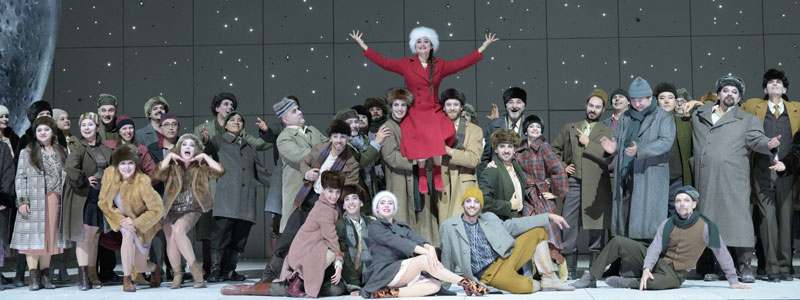
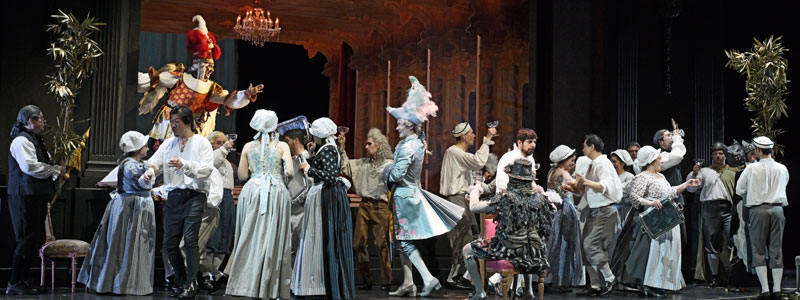
ACT 1 Ten years on Mazeppa’s a successful politician and the Kochubey family have grown richer. Mazeppa and Maria are having an affair – much to Andrei’s dismay: who’s loved Maria since they were children and knows about her unfortunate infatuation with Mazeppa. Mazeppa’s gang demonstrate their power while Kochubey prepares a grand reception for him. The situation escalates when Mazeppa says that he wants to marry Maria. Kochubey refuses to give his daughter to her godfather, so Mazeppa gives Maria an ultimatum: Either she follows him, or their relationship’s over forever. Despite dreadful pangs of conscience Maria chooses to live with Mazeppa, and leaves with him.
Lyubov’s grief-stricken by her daughter leaving home. Then pulls herself together, inciting her husband to rebel against Mazeppa. Kochubey makes a plan: He knows Mazeppa’s plotting a coup and intends to denounce him to the Tsar for high treason. Andrei volunteers to deliver the message, winning acclaim from Kochubey’s men.
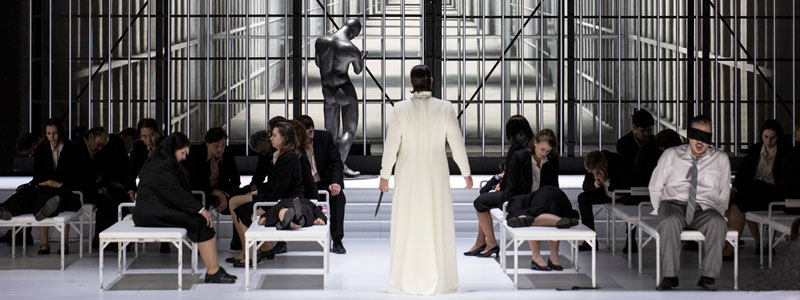
ACT 2 Kochubey‘s plan backfired: The Tsar didn’t believe the charges brought against his confidant, so handed Kochubey over to Mazeppa’s henchmen, to torture and find out where he hid his treasure. Kochubey remains steadfast, refusing to answer. Mazeppa can’t sleep. Gazing at the night sky, he’s tormented by visions of an impending day of judgement. When he hears that Kochubey refuses to divulge anything, he orders his execution, but is plagued by doubts: what will happen when Maria finds out about her father’s death? Maria appears, reproaching her lover for working day and night instead of spending time with her. On top of that, he recently toasted another woman’s health. He lets Maria in on his plans, to mollify her: He’s going to join forces with the Tsar’s enemies and lead his homeland to independence.
Ljubov appeals to Maria, hoping she’ll prevent Kochubey’s execution, then realises that her daughter knows nothing about it. This makes her plead with Maria even more desperately to put in a good word with Mazeppa for her father. Too late: Mazeppa’s men are preparing to publicly execute Kochubey and his retainer Iskra. Maria sees her father being murdered.
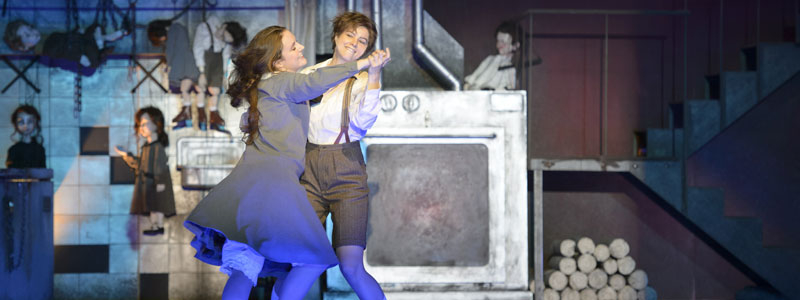
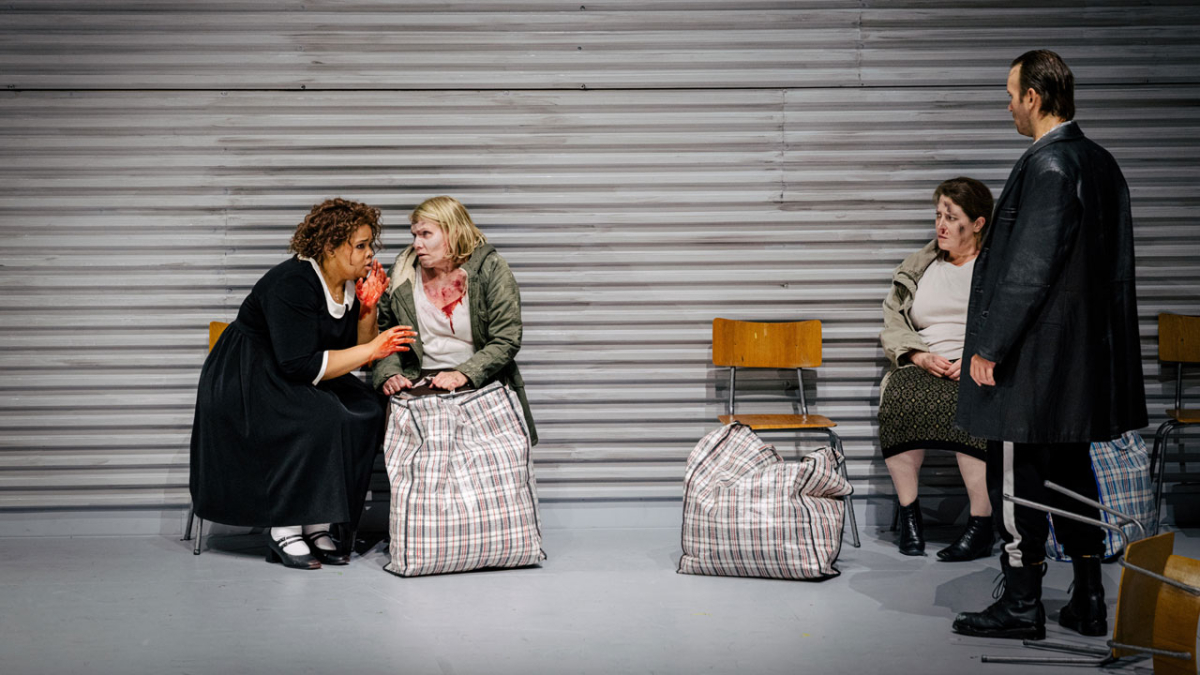
ACT 3 War broke out while Mazeppa and Kochubey’s conflict escalated. Maria, finding herself among refugees, begins to grasp the fatal consequences of her liaison with Mazeppa. Andrei, hellbent on taking revenge on Mazeppa, has reached Kochubey’s ruined estate, bringing to mind his happy childhood with Maria. Mazeppa, back at Kochubey’s house too, reflects on his fall from ruler to vagrant. When Andrei recognises Mazeppa he tries to kill him, but is mortally wounded in the skirmish.
Maria’s losing her mind: She doesn’t recognise Mazeppa, comparing him to an evil wolf. Mazeppa, at his comrade Orlik’s insistence, leaves Maria behind. She sees a vision of dead Andrei, wanting to rock him to sleep with tender song. Will she ever be able to get such scenes of rampant violence out of her head?
A love that breaks all conventions triggers a bloody family feud:
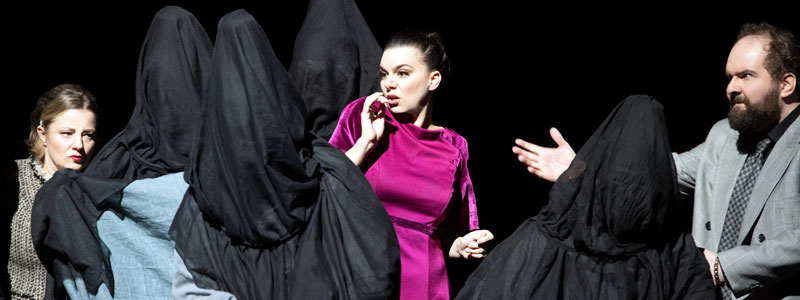
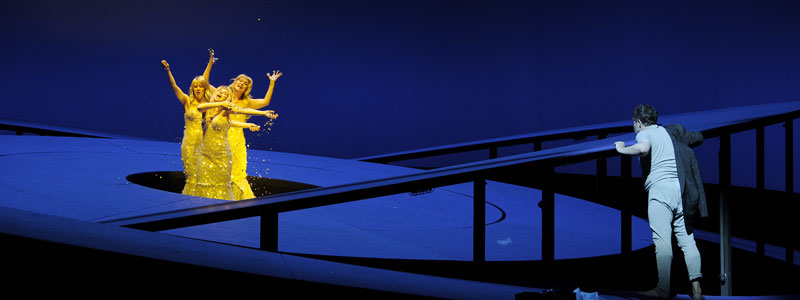
Tchaikovsky’s grim opera portrays powerful men who gradually lose all sense of proportion. Maria, wealthy Kotschubej’s daughter, loves General Mazeppa, who’s significantly older that her. When they marry, against her father’s wishes, a vicious power struggle ensues: Kotschubej charges Mazeppa, his former friend and business partner, with treason to the Tsar. But it backfires: the Tsar doesn’t believe him and has Kotschubej publicly executed. Maria loses her mind when the fatal consequences of her love sink in.
Mazeppa, like Tchaikovsky’s Eugene Onegin and Pique Dame was inspired by Alexander Pushkin, who wrote a poem, Poltava (1829), about a Ukrainian Cossack who dared rebel against Russian supremacy in the early 18th century. While Pushkin’s protagonist is a manipulative traitor, in line with the Tsarist regime of the time, Tchaikovsky makes him more human: his love for Maria as audible, in wistful, tender arias, as his brutality, with spiky rhythms and militant orchestral interludes.
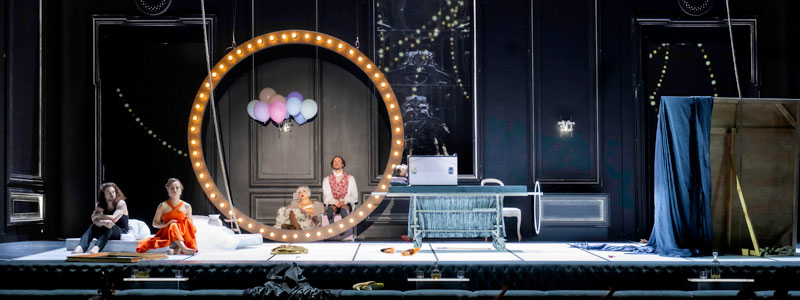
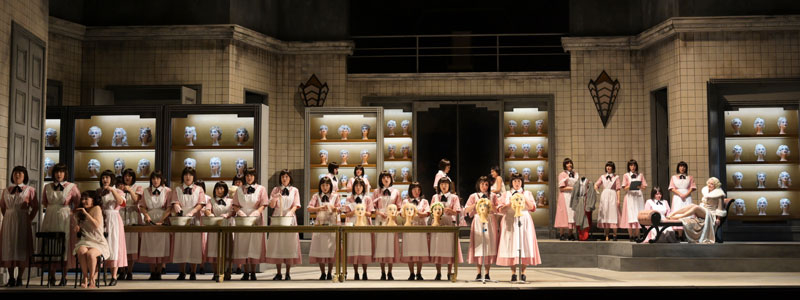
Matthew Wild stages the work like a political parable about an elite who think nothing of manipulating their own people to settle their conflicts. But it’s Maria who becomes the heart of the work: incapable of coming to terms with what’s happened she retreats into a state of childlike reverie. Can she ever forget such brutality?