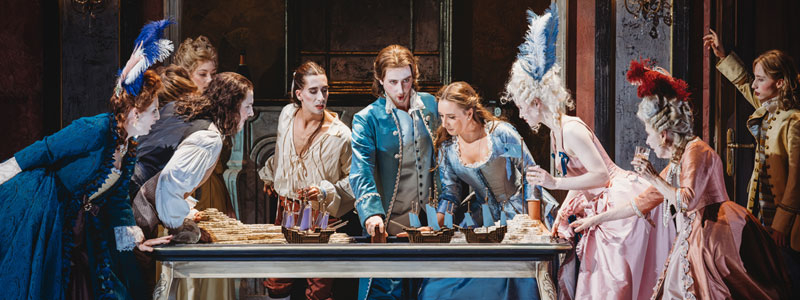
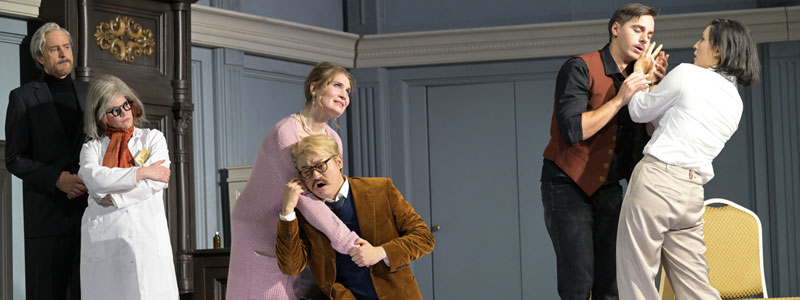
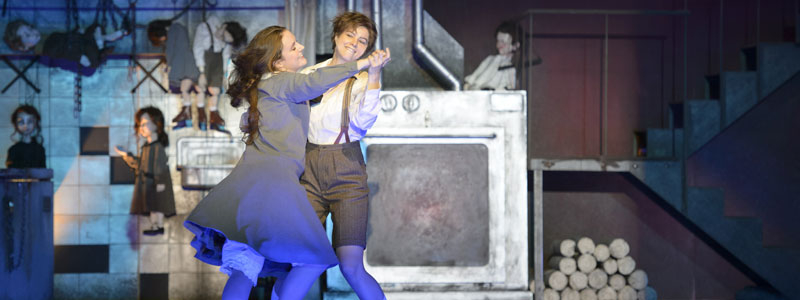
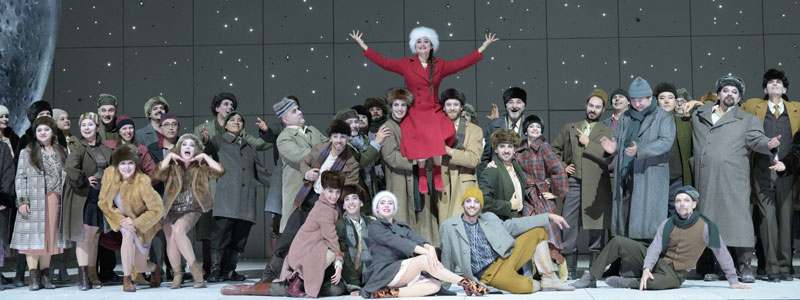
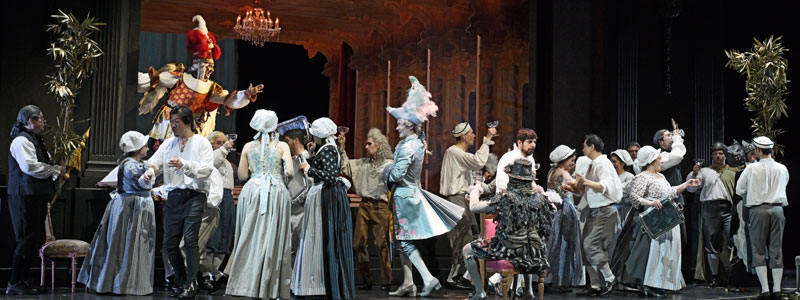
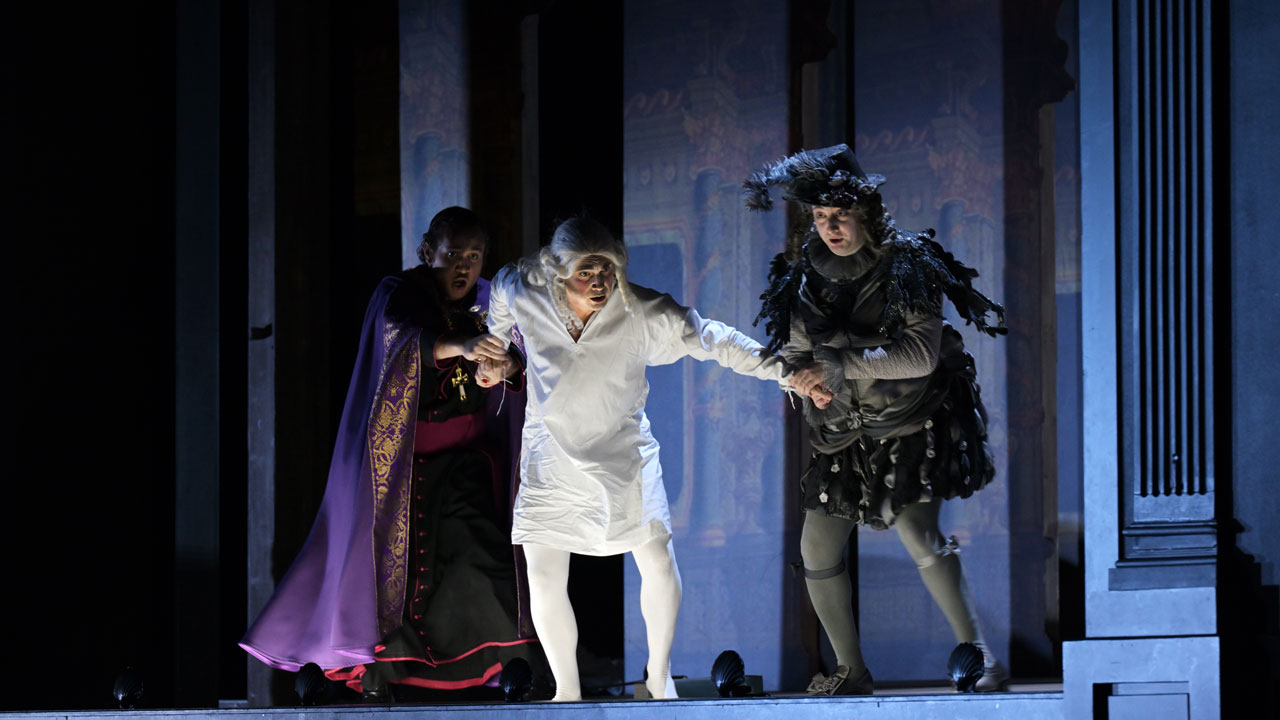
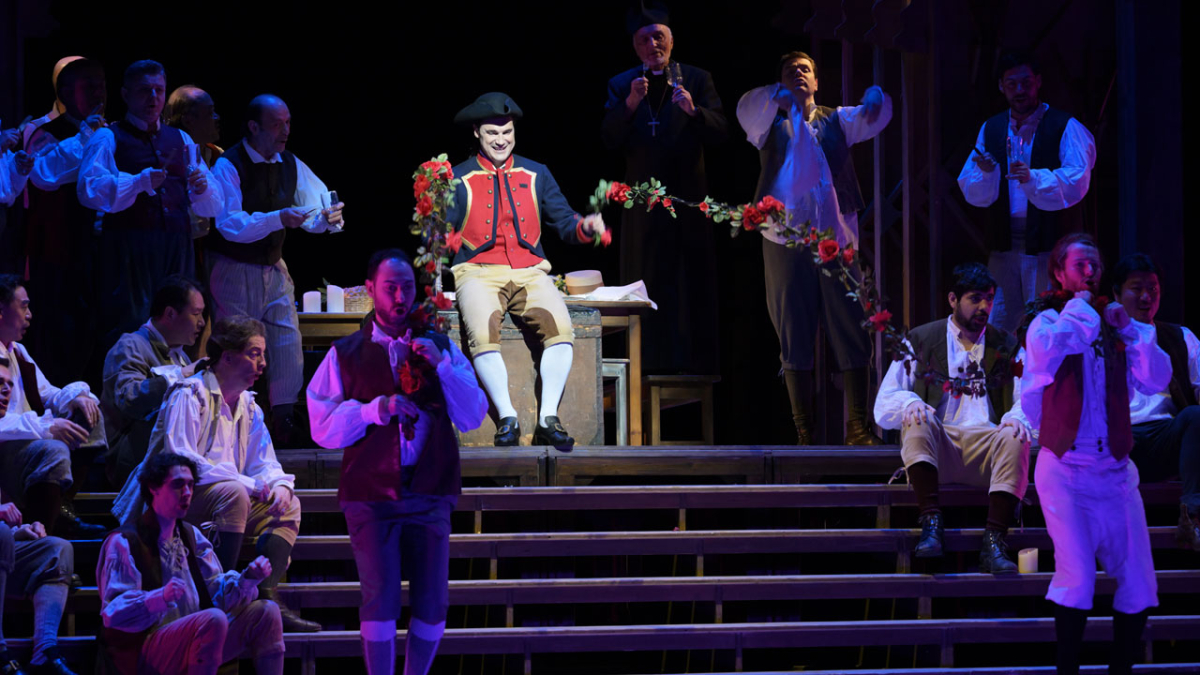
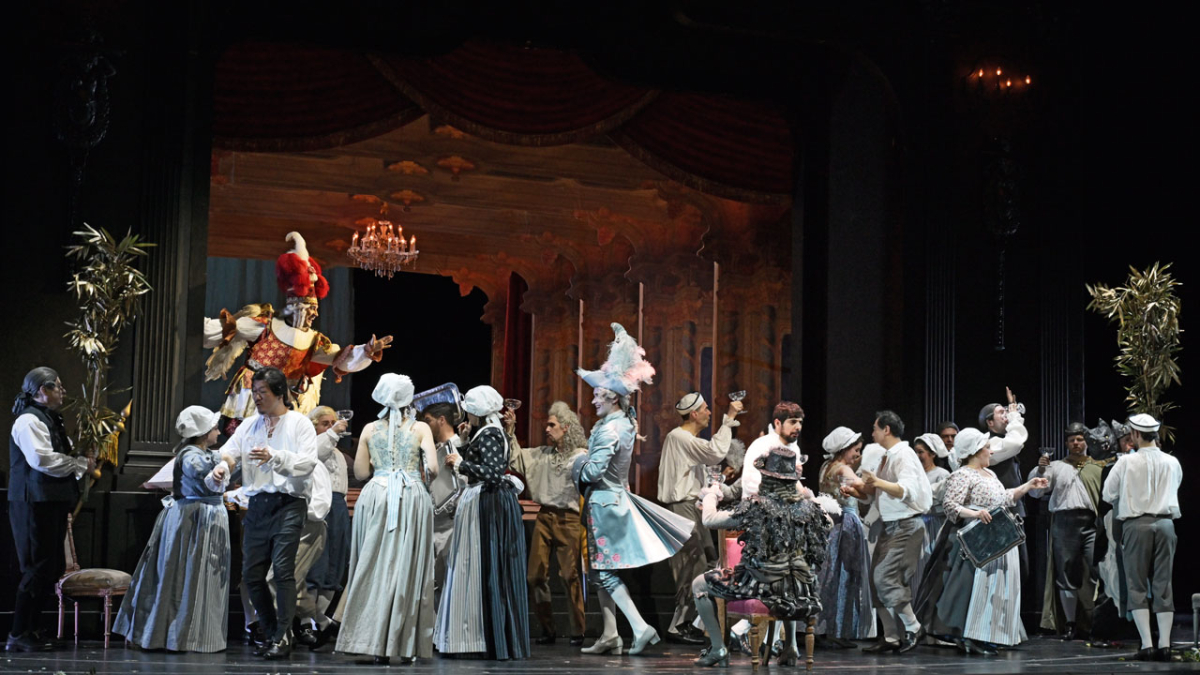
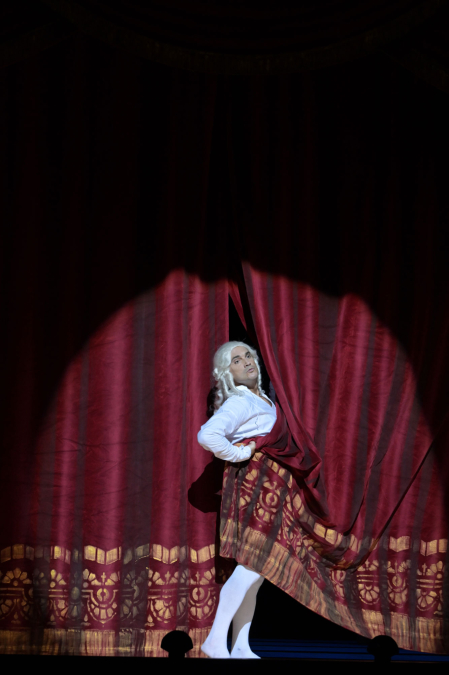
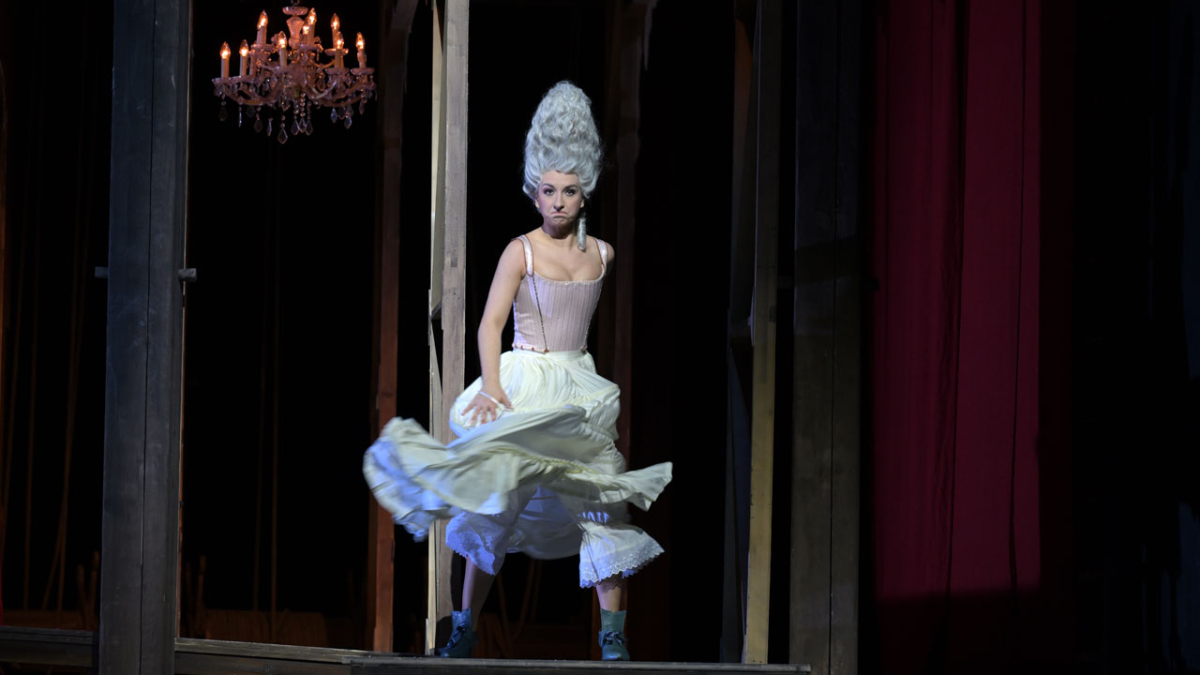
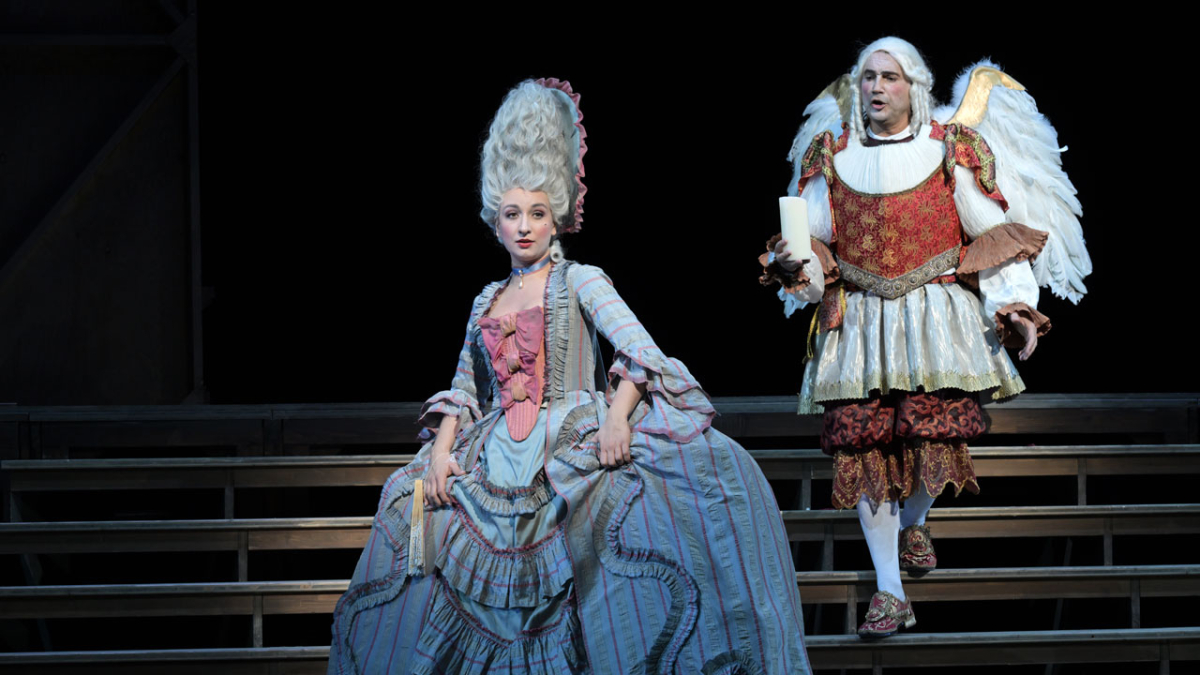
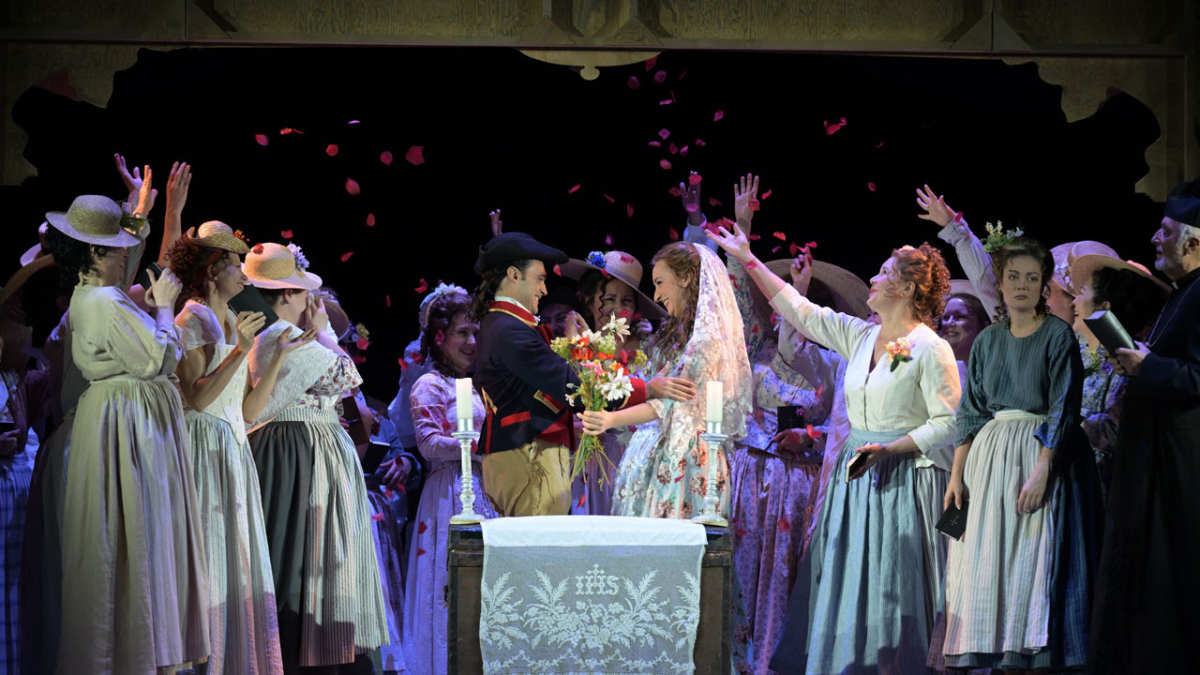
Paris. The singer down to sing Castor in Castor und Pollux at the Royal Opera pulled out, and finding a replacement's proving difficult. It looks like that the production will be cancelled, until Louis XV, himself, orders that a another singer be found … Act 1 The innkeeper, Madeleine, and postillon, Chapelou, are having a big wedding. Out of earshot, they confess doubts they had before taking their vows: Madeleine turned down the opportunity of leading a life of leisure with her wealthy aunt in the Île-de-France; Chapelou decided to ignore Mother Grabille's prediction that happiness lay in store for him in Paris, not Lonjumeau. He also found it very hard to take his leave from his bachelor life, even though he loves Madeleine ... The Marquis de Corcy turns up, stranded in Lonjumeau. He hopes the smith Bijou can repair a wheel on his coach so he can continue on his way quickly to find another singer. The wedding guests are sticklers for tradition: Chapelou has to sing the ‘The Postillon’s Romance’ before joining Madeleine on their wedding night. The marquis is blown away when he hears him: this is the voice he’s been looking for. He predicts a brilliant career for him in Paris and urges him to come with him. Chapelou demurs, then agrees. Bijou, who heard everything, wants to follow suit. Before setting off for Paris he tells flabbergasted Madeleine that her new husband's left with the Marquis to seek his fortune in the city. Act 2 Paris, 10 years later. Chapelou, now St Phar, is the principal singer at the Royal Opera. Bijou, alias Alcindor, the lead singer in the chorus. Madeleine, her aunt’s sole heir, and has risen in rank to Madame de Latour. Singers from the Royal Opera are to perform an intermezzo the Marquis de Corcy wrote in her honour, in Madame de Latour’s premises. (Madeleine, who finds the Marquis' advances tiresome, has recognised Chapelou ...) But the overworked singers take to the barricades, refusing to sing. When Chapelou finds out that their benefactress is the lovely lady in the proscenium box he’s fancied for ages, he quickly back-pedals. He finally meets her face to face and confesses his love. Then receives a letter from his ‘rightful Madeleine Birotteau’, claiming he abandoned her. Chapelou gets jittery, saying no when asked if he’s married. Madeleine intends to take revenge on her husband, who she still loves. She proposes to him, as Madame de Latour, certain that Chapelou, who’d be elevated in society by this marriage, will say yes. Which he does. Chapelou und Bijou wonder how to find a fake priest to perform a sham marriage so Chapelou won’t be committing bigamy. But Madeleine, alias Madame de Latour, has sent her maid Rose for the chaplain … Act 3 »Madame de Latour« and »St Phar« are married. Bijou panics when he finds out that a real priest performed the marriage ceremony. He and his chum Bourdon beg Chapelou to flee, to escape the death penalty. But Chapelou seems paralysed. Madeleine, with Rose’s help, goes one step further, by speaking to him as »Madame de Latour« and »Madeleine«. Chapelou tries in vain to pacify both wives, until he’s arrested by the royal guard. Madeleine reveals her true identity and admits to giving her husband the runaround. Chapelou promises not to have any more flirtations. United again, they look forward re-embarking on life as a married couple.