A Village Romeo and Juliet
Frederick Delius 1862-1934
Lyric drama in six scenes
Libretto by Delius, Jelka Rosen-Delius & Charles Francis Keary
First performed February 22 1907, Covent Garden, London
First performance of this production June 22 2014
Sung in English with German & English surtitles
Introductory talks, in German, in the Holzfoyer half an hour before performances begin
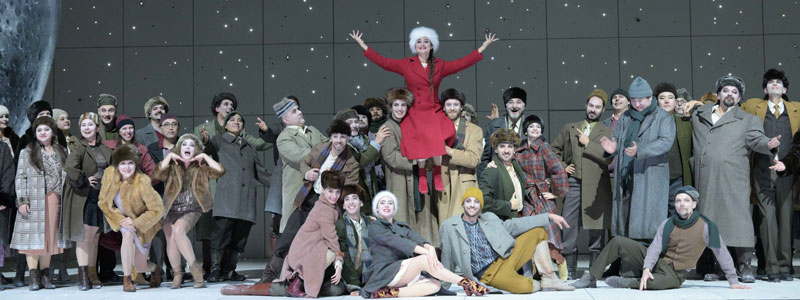
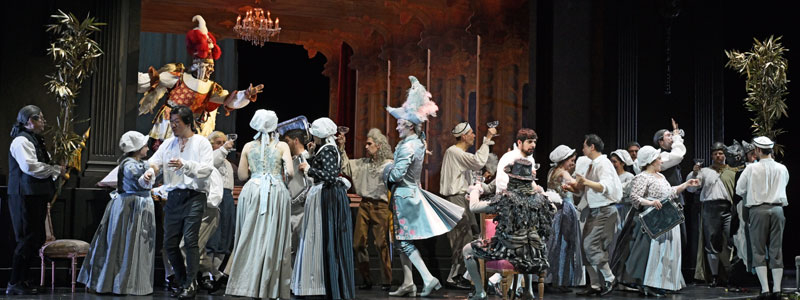
Scene 1 Fallow land divides fields belonging to two farmers, Marti und Manz. Because nobody owns the overgrown area both secretly try to take a bit more for themselves. The dark fiddler lost his rightful claim to the land because he is a bastard. He allows Sali and Vreli, the farmers' children, to play there. The farmers accuse each other of stealing land. They argue bitterly and tell their children never to speak to each another again. Scene 2 Six years later the legal dispute over the land has ruined both farmers. The children, now grown, have not seen each other during this time. Sali secretly pays Vreli a visit. To avoid being found out they arrange to meet on the land they used to play on. Scene 3 The dark fiddler appears while Sali and Vreli are declaring their love for one another. He invites them to follow him and see the world, but the lovers decline. Marti, looking for his daughter, finds them together. When he tries to drag Vreli away Sali, wanting to protect her, fells him with a stone. Scene 4 The wound to his head caused Marti to lose his mind and Vreli had to take him to a lunatic asylum. Vreli and Sali spend a last night in her home, which now has to be sold. Both dream the same dream, their wedding day. In the morning they decide to visit a famous fair in a neighbouring village. Scene 5 The lovers try to enjoy the festivities. They are recognised by the villagers, who poke fun at them for being so poor. Sali suggests that they go to the »Paradise Garden« hostelry instead. Scene 6 They meet the dark fiddler a third time, who tells his cronies about the argument over the land and the injustice he suffered. Once again he offers them the chance to share a carefree existence, with his fellow vagabonds, in freedom. Sali and Vreli cannot imagine being able to lead such a life. They refuse, deciding to be united forever, in death.
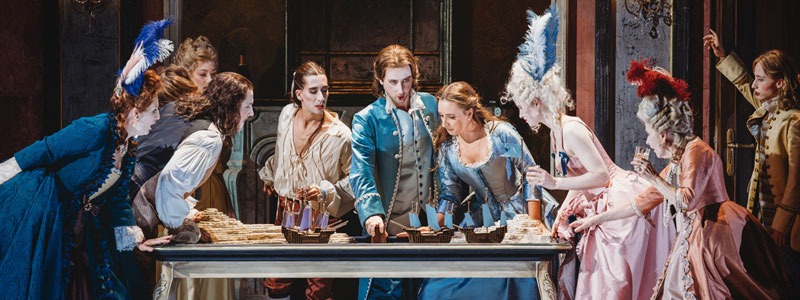
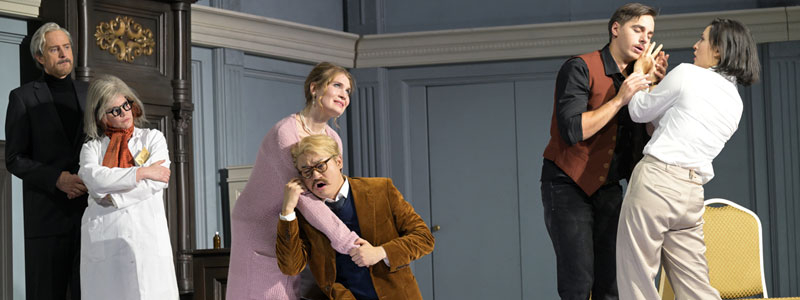
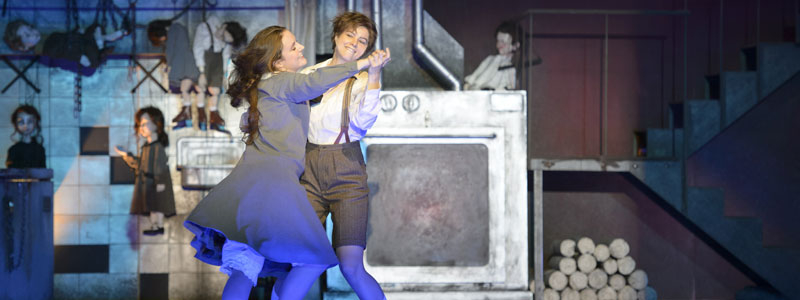
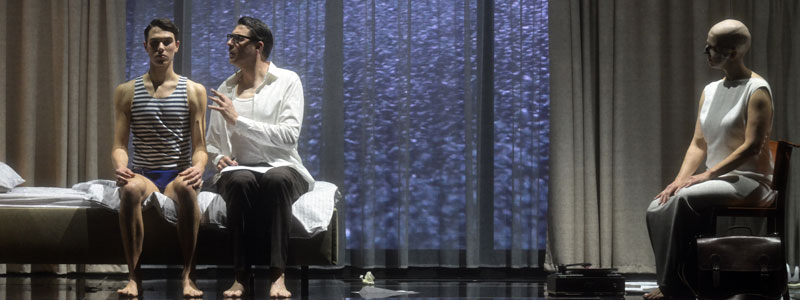
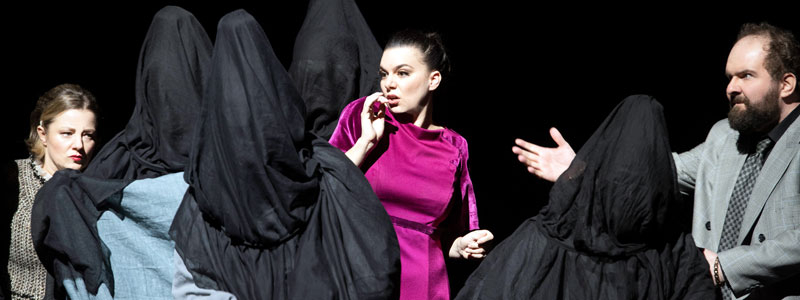
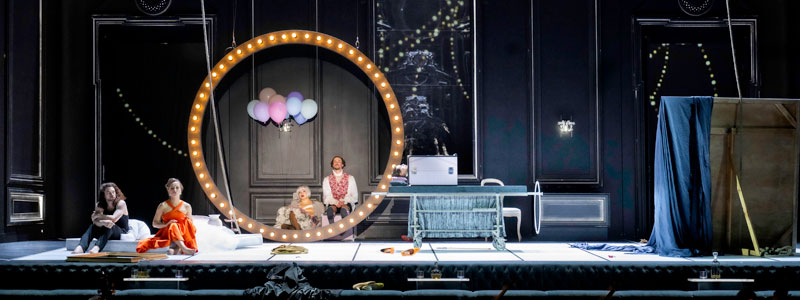
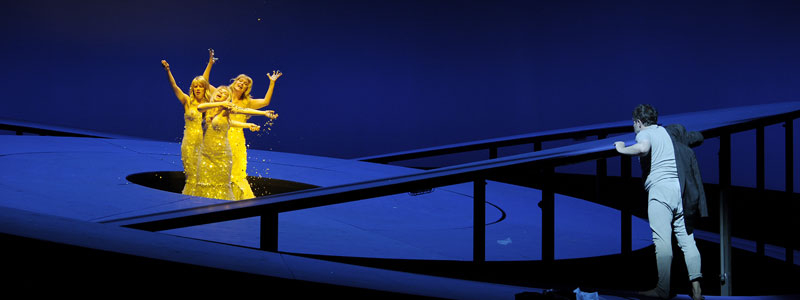
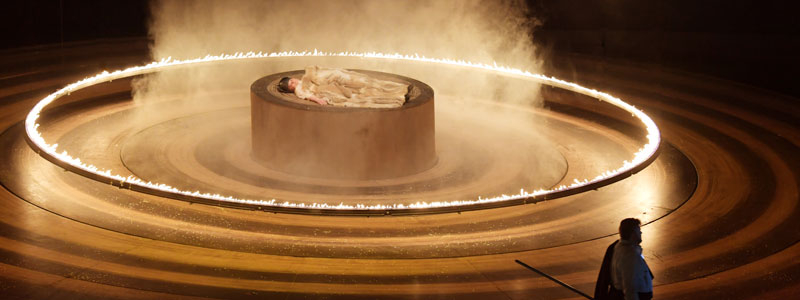
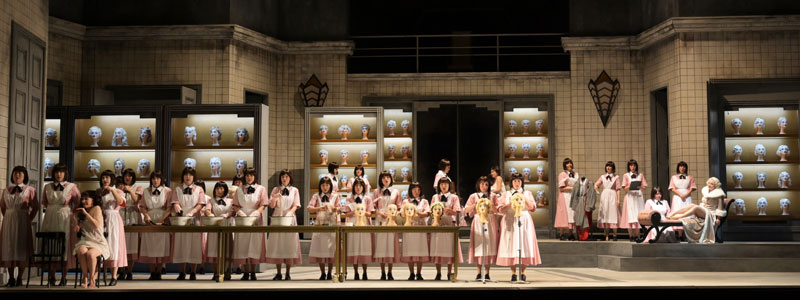
The opera is based on Gottfried Keller's realistic version of Shakespeare's Romeo and Juliet: The setting is a village in Switzerland, not Verona, the protagonists are Sali and Vreli, not Romeo and Juliet. A constant companion to the young lovers, who cannot find happiness together and die in the end, is a mysterious violinist, who seems to embody the longing for freedom and journey destiny has ordained for them... With A Village Romeo and Juliet the for far too long overlooked British composer Frederick Delius created a unity of text and music, his nuanced music expressed emotions and sensibilities combined with colour rich nature panoramas. Moments in the score bring Debussy and Richard Strauss' music to mind. The director Eva-Maria Höckmayr and set designer Christian Schmidt bring the work into the present day creating, through simultaneitys and flash-backs / forwards, in two symmetric spaces – an abstract world and realistic dream in which youth and old age, life and death become merged.