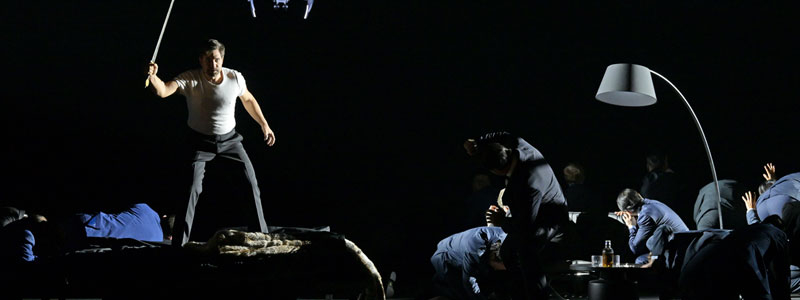
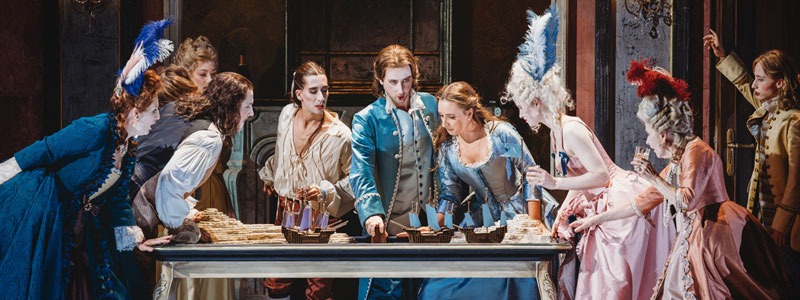
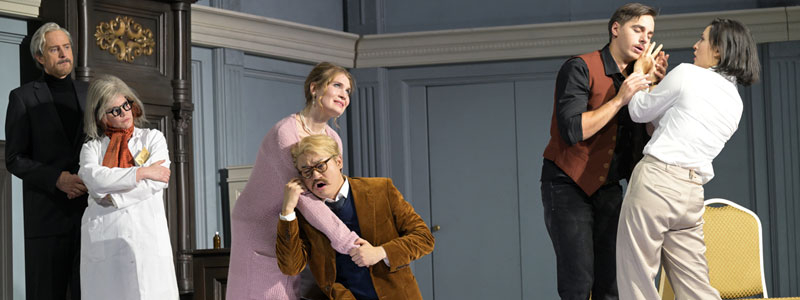
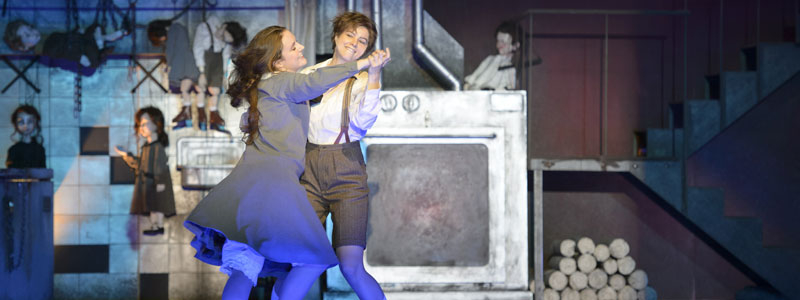
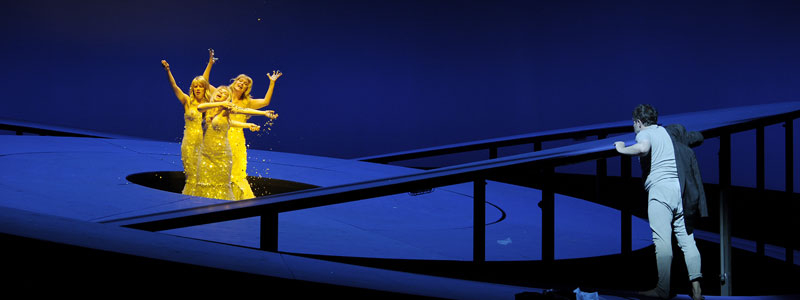
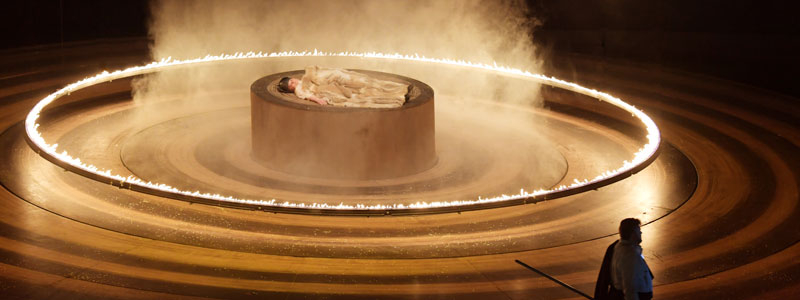
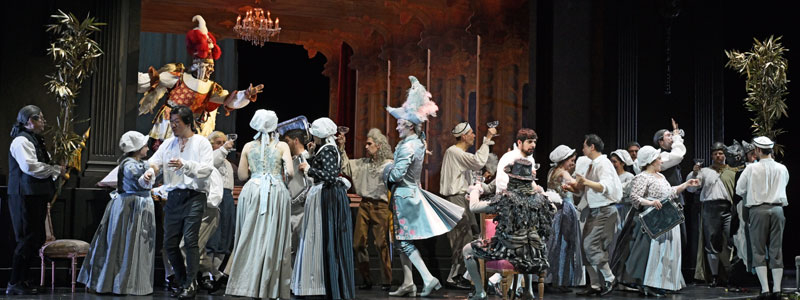
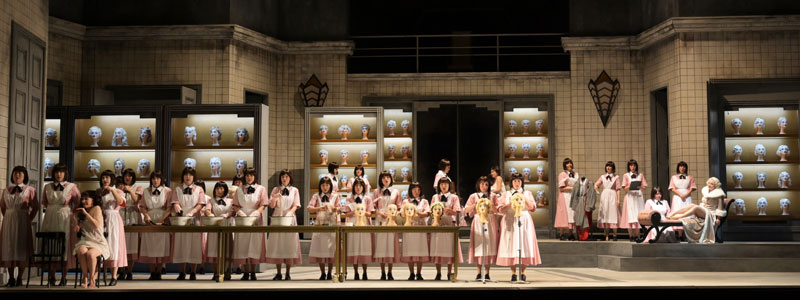
The moon rises and dryads awake, calling the Water Sprite up from the depths to tease him. The naiad Rusalka is unhappy and tells the Water Sprite that ever since she fell in love with a prince she has been filled with the desire to become human. Horrified, the Water Sprite cautions her against this, warning her of the human world. She is determined. He sadly refers her to Jezibaba. Rusalka offers up a solemnn prayer to the moon, to shine for her beloved and lead him to her. Rusalka calls forJezibaba. She praises the witch's sorcery, and asks to be transformed into a human being. Jezibaba mocks her and tells her of the consequences her decision will have: If she ever loses the Prince's love, she will be doomed for all eternity, and the Prince will share her fate. But Rusalka is convinced her love can conquer all evil. Jezibaba gives her human legs, but she remain mute in the company of humans. She forsees that Rusalka will return soon, and leaves. The Prince has lost his way. He feels like he is falling under a strange spell and pays no heed to the hunter's warnings. When he sees Rusalka, he is enthralled by her beauty. He woos her but she cannot answer. Nevertheless, he leads her away as his bride. Act 2 The Gamekeeper and Turnspit speak of the wedding preparations and the Prince's chosen bride. They are suspicious of the mute stranger, and believe she is an evil sorceress. The Prince reproaches Rusalka for not showing any passion towards him. He has been trying to kindle her desires for a week, but she remains cold and aloof. When a Foreign Princess chides him for neglecting his duties as a host, he eagerly turns his attentions to her, ignoring Rusalka. The Water Sprite appears, bemoaning Rusalka's fate as the guests at court sing a wedding song. When Rusalka realises that the Princess has found favour with the Prince, she tells the Water Sprite of her suffering. As a water-being, she is incapable of the fiery passions the Prince seeks in her. The Prince renounces his love for Rusalka and woos the Princess. Rusalka tries to win him back again, but is rejected. The Water Sprite curses the Prince who calls out to the Princess for help, but she abandons him. Act 3 Helpless and dejected, Rusalka has returned to her place of origin, but the way back is barred. She wishes she could die. Jezibaba appears. Rusalka has one last chance of regaining her former existence: she must kill the Prince with her own hands. Rusalka cannot bring herself to destroy the Prince's happiness and refuses, sealing her fate to wander forever between the worlds as a will-o'-the-wisp. Her sisters call out from the distance, that she may never rejoin them. The Gamekeeper and Turnspit come looking for Jezibaba, to provide a remedy for the Prince, who has lost his wits since Rusalka's disappearance. The Water Sprite appears, and they flee in fright. The dryads sing of their beauty, but thoughts of Rusalka's fate cloud their merriment. The Prince is desperately searching for his lost love. When she finally appears before him, he asks for forgiveness and a kiss. But Rusalka knows she can now only bring him death. He begs for a last fatal embrace and she relents. He dies. Rusalka begs God to take pity on his soul and disappears into the void.