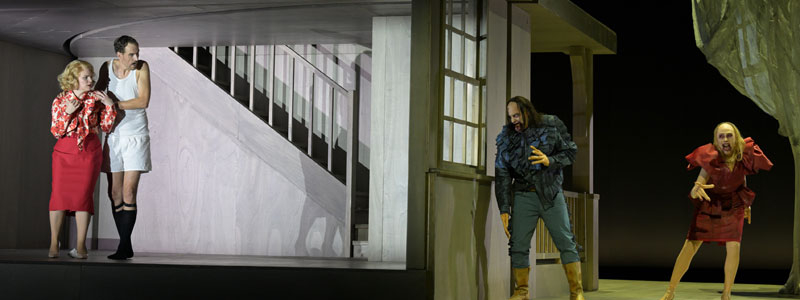
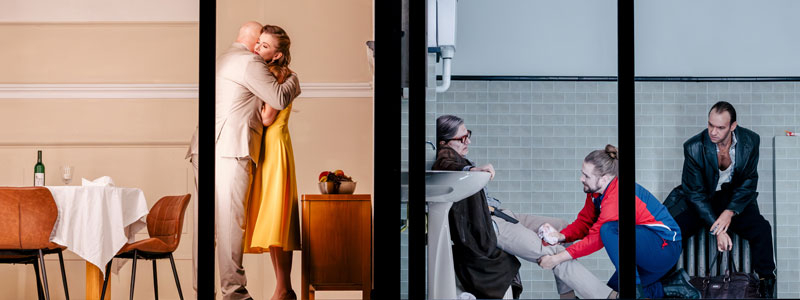
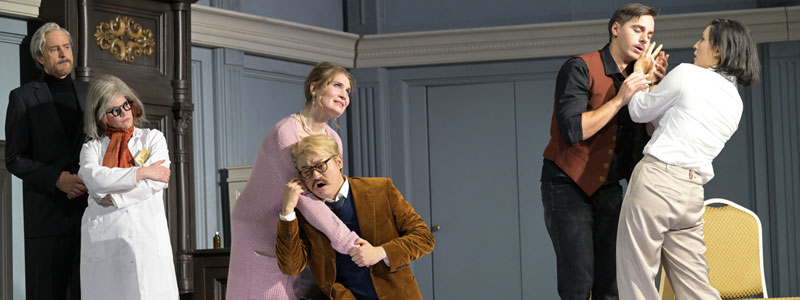
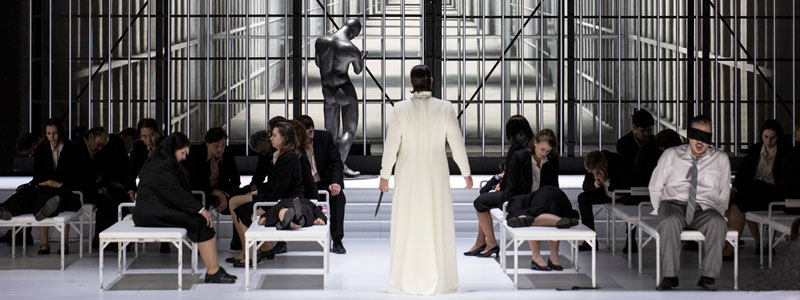
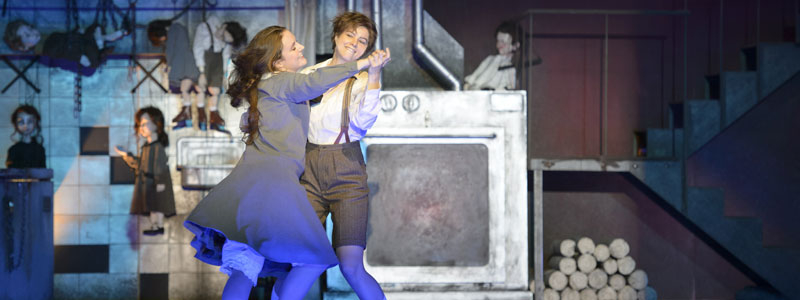
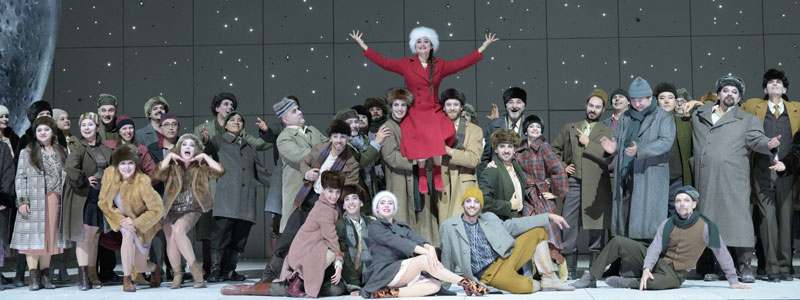
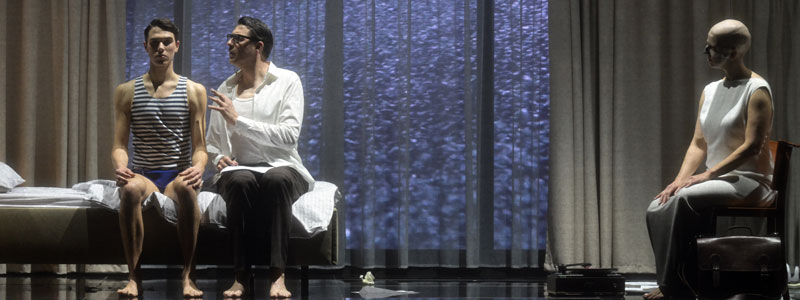
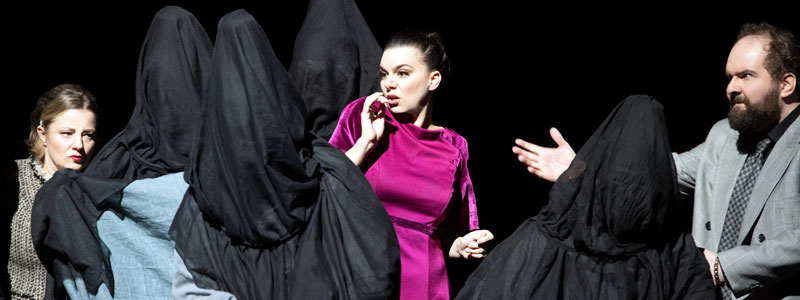
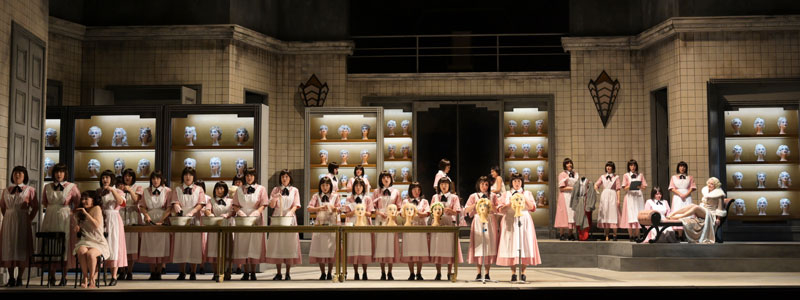
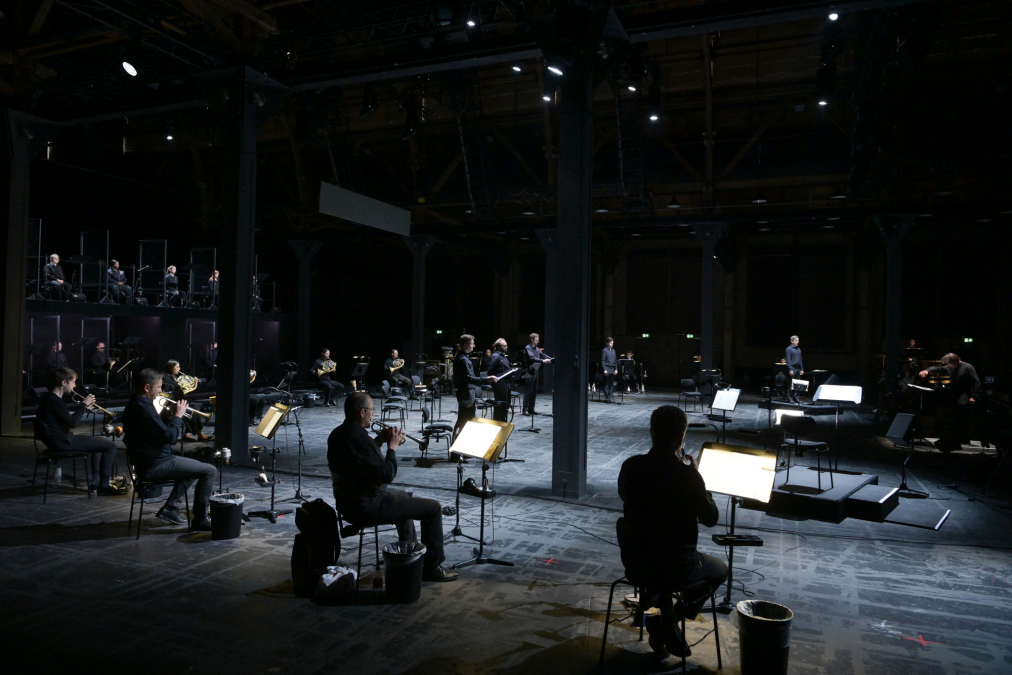
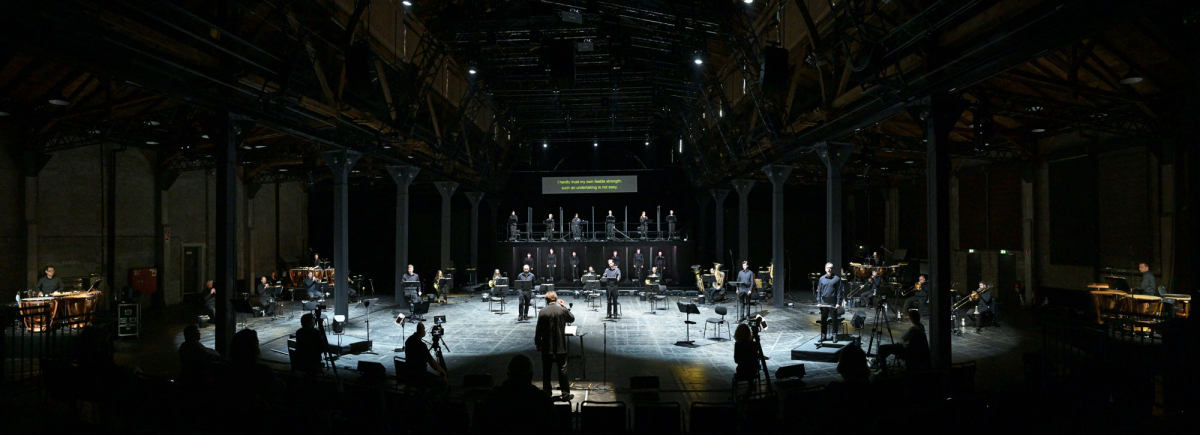
A man, midway through life; finds himself lost in a dark forest, feeling at rock bottom: Dante, banished from his home town of Florence, failed as a politician, artist and man. He reinvents himself by imagining a journey to the afterlife, and describing it in powerful verse. He turns himself into the main protagonist in his epochal work, the »Divine Comedy«. 1) Ma io perché venirvi? o chi ‘l concede? – But who allowed me come here? No sooner has Dante started on his journey through hell when he is riddled with doubt. 2) Per me si va nella città dolente – Through me you enter the city of suffering The gates of Hell open and the howls of the damned are heard. Charon, the ferryman, wants to turn him away because he is still alive, but ends up taking him to the other side of the river of death with the dead. – The ground shakes, Dante faints. He wakes to see the monster Minos; who judges the severity of the transgressions all sinners must confess to him, casting them to their place of punishment with his tail. – A hurricane strikes, hurling the damned souls before it like birds; among them is Francesca da Rimini. 3) Amor, ch’a nullo amato amar perdona – Love, that must always be reciprocated Dante, full of pity, listens to Francesca's tale. She and Paolo, who was in love with her, became closer while reading »Galehaud«, a book about Lancelot's love. They kissed, Francesca's husband burst in, and killed them both. Now they are inseparable in Hell for eternity. Dante passes out again. 4) Novi tormenti e novi tormentati – I saw new suffering and new sufferers Icy rain falls. Dante continues on his journey across the Styx's swamp, furiously fending off the stinking rich, ostentatious and avaricious thug Filippo Argenti when tries to climb into the boat. – Dante meets the philosopher Cavalcante de Cavalcanti on a burial ground with coffins of flames. He asks after his son, one of Dante's close friends and a fellow writer, but he doesn't answer; Cavalcante is desperate. – The sinners who have been turned into bushes in the woods of suicide are eaten by Harpies. When Dante breaks off a twig he comes face to face with the former powerful Imperial Chancellor Pier delle Vigne, one of the Emperor's confidants, who was suspected of treason and committed suicide. – The damned are tortured by rains of fire in a sandy desert. One of them is Dante's former teacher Brunetto Latini, for whom he feels mutual affection. 5) Luogo è in Inferno detto Malebolge – There's a place in Hell called the ditches of evil Dante encounters another monster: Geryon, a dragon with the face of an honest man. Dante sees naked sinners in the »ditches of evil's« rocky fissures, being whipped by horned devils. Other sit in a cesspit; including the sycophant Alessio Interminei, who is covered in so much excrement that he's barely recognisable. Others have their heads on back to front, so they have to walk backwards; their punishment for thinking they could predict the future. 6) I’ vidi, e anco il cor me n’acca¬priccia – I saw it, it still horrifies me today A swarm of winged devils called »evil claws«, play nasty games with the damned, who are sweltering in a sea of molten pitch, forcing them below the surface with their tridents. – In another ditch, hog-tied sinners are being bitten by snakes, whose bites make them go up in flames; their bodies regenerating in a flash in the ashes. Here Dante meets the church robber Vanni Fucci, and gets very angry about his evil deeds. – Two other thieves present a curious spectacle that continually repeats itself: while one takes on the form of a snake, the other appears in human guise. Then they merge into one, change appearances and are two beings again: the snake turns into a human, the human into a snake. 7) Fatti non foste a viver come bruti – You were not created to live like animals Then Dante encounters Ulysses. At the end of his odyssey, after leaving Circe behind on her island, he went home to Ithaca and his wife Penelope, his son and old father. He didn't stay long, setting out to sea again with his remaining companions, sailing westwards to discover new lands beyond the Pillars of Hercules. His insatiable thirst for knowledge was punished when his ship, in sight of an island (the Mount of Purification?), was whirled around in a storm, he and his companions were sucked down by a powerful whirlpool and the waves closed over them. 8) Ogne lingua per certo verria meno – No language could even begin to try Dante approaches the bottom of the black hole of hell; he cannot find words to describe what he sees. Sinners are frozen solid in Cocytus, a sea of ice. One of them is Ugolino della Gherardesca, gnawing on the skull of his adversary Ruggieri degli Ubaldini, who locked him and his sons in a tower and left them to starve. Ugolino describes how one died after the other and how he was forced to turn cannibal and eat his own sons. Dante finally stands before the Prince of Hell, sticking out of the sea of ice: Lucifer, the fallen angel. He has three heads; with an arch-sinner in each mouth. 9.) Epilogue: Quindi Cocito tutto s’aggelava – Whereby the Cocyt is closed in by ice It's difficult for Lucifer to speak, as his mouth's full, so to speak. He maintains what Dante can hear are not his words, but the thoughts going through Dante's head while he's looking at Lucifer. He ends by saying: »I say nothing; are you brave enough to listen to me?«